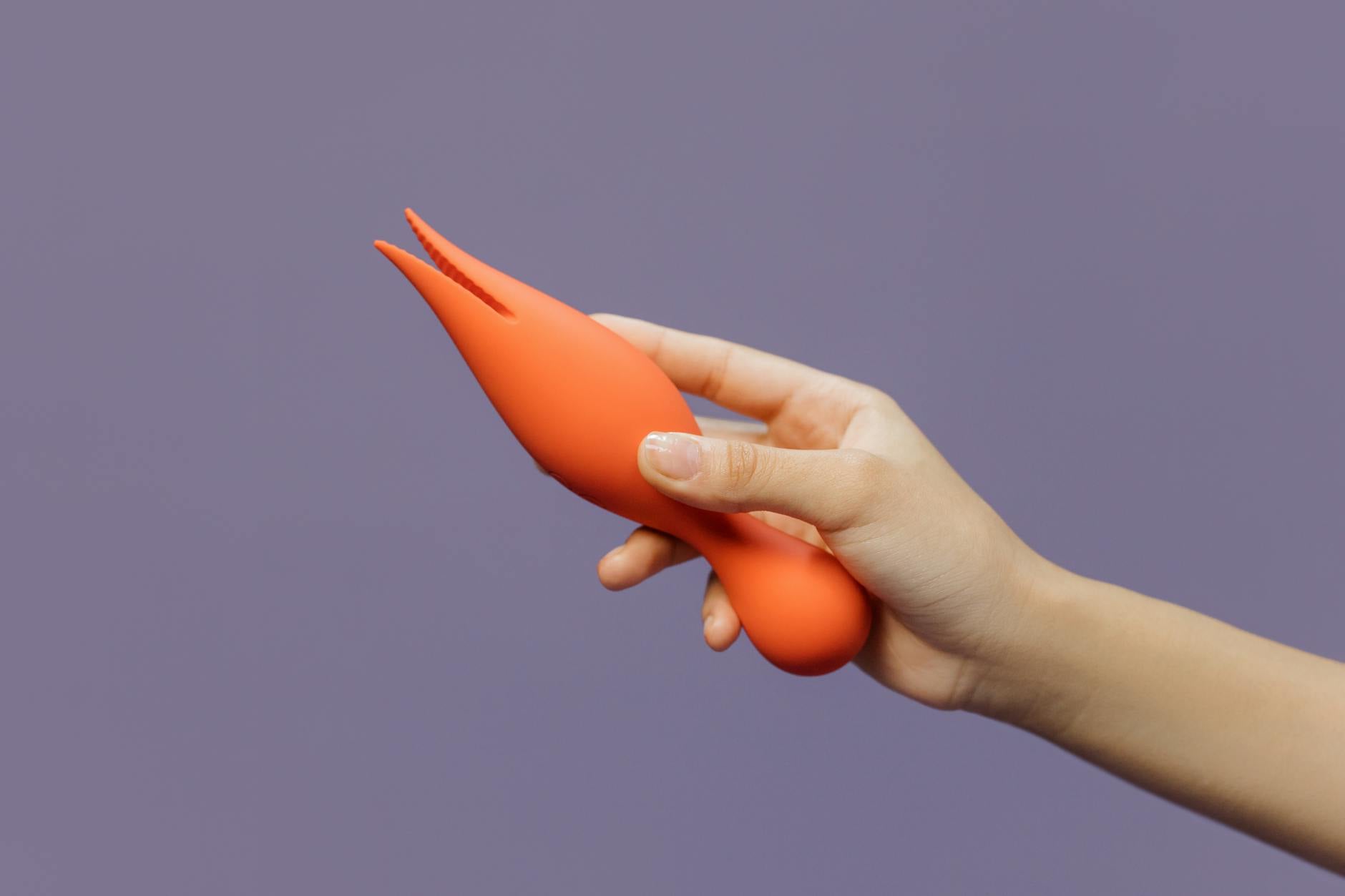
How Lemon Vibrator Sensation Changes During Perimenopause Years Before Official Menopause
Perimenopause is the worst-kept secret in women's health. You're not officially menopausal yet, but your body is absolutely in transition. Estrogen and progesterone are doing a complicated dance, and nobody handed you the choreography. The result: your pleasure doesn't feel the way it used to, and you're left wondering if something's wrong with you or if your favorite lemon clitoral vibrator has somehow changed overnight.
It hasn't. You have.
Here's what perimenopause actually does to sensation, why lemon vibrators and other clitoral vibrators behave differently during this phase, and what you can do about it instead of just accepting the story that pleasure is supposed to fade.
What perimenopause actually is (not just early menopause)
Perimenopause isn't early menopause. It's the 5 to 10 years leading up to your last period, usually starting somewhere in your 40s (sometimes late 30s). Your ovaries are gradually producing less estrogen, but it's erratic. Some months estrogen spikes. Other months it plummets. Your body doesn't know what's coming, so nothing feels stable.
This hormonal inconsistency is completely different from menopause, where hormones drop and stabilize at a new baseline. In perimenopause, you're living with chaos. One week you feel like yourself. The next week, nothing quite works the way it did.
Sensation changes happen during this phase because estrogen receptors are literally everywhere. Your clitoris has them. Your vaginal tissue has them. Your nervous system has them. When estrogen is fluctuating, these tissues are essentially getting a variable amount of input. Some days, rich. Other days, depleted.
The specific ways sensation shifts during perimenopause
You might notice that orgasms feel different. Not impossible, but less pronounced. Arousal might take longer to build. The clitoris might be more sensitive to direct pressure on some days and feel numb on others. This isn't psychological. This is tissue responding to hormonal signals.
Three things happen during perimenopause that directly affect how lemon vibrators and other clitoral toys feel.
First, lubrication becomes inconsistent. Some days you'll have plenty. Other days, especially in the second half of your cycle, your vagina might feel drier than it did at 30. This changes how internal sensation registers and how comfortable external stimulation feels.
Second, the clitoris starts to change structurally. The hood might thicken slightly. The glans might become more or less sensitive depending on where you are hormonally. This is subtle, but over months you'll definitely notice.
Third, your pelvic floor gets less estrogen support. The muscles become less elastic, tension can build more easily, and this affects how sensation travels through your whole pelvic region. Orgasms might feel more localized instead of full-body.
None of this means pleasure is ending. It means pleasure is shifting, and your approach needs to shift with it.
Why lemon vibrators work differently during perimenopause
A lemon clitoral vibrator uses suction rather than traditional vibration. Instead of buzzing against tissue, it creates a gentle seal and pulse. This matters a lot during perimenopause.
When estrogen is erratic, direct friction from a traditional vibrator can feel too intense one day and completely underwhelming the next. The suction motion of a lemon vibrator is more forgiving because it doesn't rely on tissue thickness or sensitivity staying constant. The seal and pulse work with your body rather than against it.
During perimenopause specifically, many people find that lemon vibrators feel more consistent than other clitoral vibrators. The suction doesn't require the same level of tissue response that traditional buzzing does. If your clitoris is feeling tender, the suction is gentler. If you're feeling numb, the suction can actually wake things up because it's stimulating in a completely different way.
That said, you'll probably need to dial in your settings differently than you did in your 30s. Starting at a lower intensity and building up over 20 to 30 minutes instead of 5 to 10 is pretty standard. Your body isn't broken. It's just not in the same hormonal state it was before.
How to adapt your pleasure practice during this transition
The smartest thing you can do is stop expecting perimenopause sensation to feel like pre-perimenopause sensation. Mourn that if you need to, but then get curious.
Start with lubrication. A good water-based lubricant isn't cheating. It's adaptation. Use it regardless of how you're feeling naturally. This eliminates the friction variable and lets you focus on what's actually happening with sensation.
Timing matters more now. Arousal takes longer during perimenopause, especially in the luteal phase (the second half of your cycle when progesterone is high). Budget 20 to 40 minutes instead of assuming faster is still possible. This isn't a flaw. It's actually an opportunity to slow down if you've been rushing for years.
Explore different patterns. If your usual intensity on a lemon vibrator isn't landing the same way, try a different pattern rather than just turning it up louder. Many lemon vibrators have multiple pulse rhythms. You might find that a slower, broader pattern works better now than the fast setting you relied on for years.
Pay attention to your cycle. Not because you need to obsess over it, but because perimenopause is erratic. Keep a quick note of what worked and what didn't. You'll start to notice that certain weeks feel more responsive than others. This is useful information for planning actual pleasure time instead of just hoping it happens.
The role of partner dynamics during perimenopause
If you're with a partner, perimenopause sensation shifts can feel confusing or even like rejection if nobody's talking about what's happening. Your partner might be used to you orgasming quickly and easily, and now you need 30 minutes and lots of foreplay.
The conversation to have is not "my body is broken." It's "my body is changing, and here's what actually helps." You can show them. You can try a lemon clitoral vibrator together. You can explain that the way pleasure builds is different now, and that's not less, it's just different.
If your partner is frustrated because penetration feels less immediate, you have permission to say that's not your job to fix right now. Your pleasure in perimenopause might come more from external clitoral stimulation than penetration. Both things are valid. You're not choosing one over the other forever. You're adapting to what your body needs right now.
When to talk to a doctor about sensation changes
Most sensation changes during perimenopause are totally normal. But if you're experiencing pain, significant numbness that doesn't improve, or arousal that's completely disappeared, those are worth mentioning to a gynecologist. Sometimes it's just hormones. Sometimes it's something else that happens to overlap with perimenopause.
A perimenopause-informed doctor (and yes, you might need to ask specifically if they have that training) can help you figure out whether you're dealing with normal transition or something that needs treatment. They can also talk you through hormone therapy if that seems relevant to you.
One more thing: if sensation changes started suddenly and weren't gradual, bring that up too. Perimenopause shifts are usually slow. Sudden changes might point to something else worth investigating.
The sensations that often get better after you adjust
Here's the part nobody tells you. Once you stop fighting perimenopause sensation and instead adapt to it, pleasure often becomes more intentional and actually more satisfying. You're not chasing the orgasm that used to happen automatically. You're building toward it. That's a completely different experience, and for a lot of people, it's better.
Many of my clients tell me that once they got past the frustration of things feeling different, they discovered that slower, more deliberate pleasure actually felt richer. They started actually paying attention instead of just waiting for release. A lemon vibrator became a tool for that kind of attention rather than a shortcut to orgasm.
Your pleasure isn't ending during perimenopause. It's being remixed.
FAQ
How long does perimenopause usually last?
Perimenopause typically lasts between 5 to 10 years, though some people experience it for slightly shorter or longer periods. It usually starts in your 40s but can begin in your late 30s. Once you've gone a full year without a period, you've officially entered menopause. That means you're not in perimenopause anymore.
Can I use the same lemon vibrator settings I used before perimenopause?
Maybe, but probably not consistently. Hormonal fluctuations mean what felt good last week might feel too intense or underwhelming this week. Many people find they need to experiment with different patterns and intensities depending on where they are in their cycle. This isn't frustrating if you expect it. It's actually useful information.
Does perimenopause sensation always feel duller?
Not necessarily duller, just different. Some people experience hypersensitivity where clitoral stimulation feels more intense. Others experience numbness. Most people get both at different times. The key is understanding this is normal and planning around it rather than assuming something's broken.
Will my sensation come back the same after menopause?
No. But it doesn't have to. Menopause sensation is its own thing. Some people find that once hormones stabilize after menopause, pleasure actually becomes more consistent than it was during perimenopause's erratic years. How Lemon Vibrators Work Better After 40 (Even as Estrogen Drops) covers what that transition looks like.
Can I use hormone therapy to keep sensation exactly the same?
Hormone therapy can help some people smooth out the erratic swings of perimenopause, which can make sensation more consistent. But it won't necessarily keep things exactly the same as your 30s. That ship has sailed either way. Hormone therapy is about feeling better and more stable, not about time travel.
What if I'm losing interest in sex during perimenopause, not just experiencing sensation changes?
Sensation changes and desire changes can happen together during perimenopause, but they're different things. Sensation is about how things physically feel. Desire is about wanting it in the first place. If desire has really flatlined, that's worth exploring separately, especially with a therapist or a perimenopause-informed doctor. Sometimes it's hormonal. Sometimes it's relational. Sometimes it's both. How to Use a Lemon Vibrator When Arousal Feels Disconnected From Emotional Intimacy might be useful if you're noticing a gap between what you think you should want and what you actually want.
The bottom line
Perimenopause is not your body betraying you. It's your body communicating that something has shifted. The conversation you need to have isn't with yourself about what's wrong. It's with yourself and maybe your partner about what actually works now. A lemon clitoral vibrator might stay part of your pleasure toolkit. You might just need to use it differently. You might discover that slower, more intentional pleasure is actually what you've been craving all along. The only wrong move is assuming you know what perimenopause pleasure is supposed to feel like. It's supposed to feel like yours.