
Best Lemon Vibrator Settings for Different Types of Pleasure
Here's the thing: most people treat their lemon vibrator like a light switch. Intensity high or low, pattern A or pattern B, done. But that's like eating every meal at the same temperature and wondering why nothing tastes interesting anymore.
The lem vibrator has settings for a reason. Each pattern and intensity combination creates a subtly different chain reaction in your nervous system. Learn to move between them, and you're not just having different orgasms. You're actually expanding what your body is capable of feeling.
Why vibrator settings matter more than you think
Your clitoris has roughly 8,000 nerve endings packed into a space smaller than a pea. That's an insane amount of sensory real estate. A suction vibrator like the lemon clitoral vibrator works by creating rhythmic negative pressure, which stimulates those nerves in waves rather than constant vibration.
But here's what changes everything: the pattern of those waves. A steady pulse feels completely different from a rolling rhythm or a building intensity. Your body's arousal system doesn't just respond to "on" or "off." It responds to novelty, progression, and the specific cadence of stimulation.
Think of it like music. A steady beat keeps you moving. A syncopated rhythm makes you dance differently. A crescendo changes your whole emotional response. Same with your lemon vibrator's settings.
The shallow peak pattern (fast rhythm, lower suction)
If you want quick, focused, localized pleasure, this is your setup. Use pattern 1 or 2 (the rhythmic pulses) at intensity 2 or 3. The lower suction takes pressure off your tissues while the faster rhythm creates that "bright" sensation some people describe as electric or sparkling.
What's happening: you're stimulating the external nerve clusters without deep tissue involvement. This pattern tends to build quickly and plateau fast. Orgasms from this setting feel sharp, almost like a sneeze. Short, satisfying, done.
This works well if you have limited time, if your tissues are sensitive after other activity, or if you want to finish and move on. It's also your friend if you're exploring with a partner and want to keep things light and playful.
Tip: don't linger here for 20 minutes waiting for something more intense. This pattern peaks and flattens. If you want something deeper, switch after 5 to 10 minutes.
The rolling wave pattern (variable rhythm, medium suction)
Use pattern 3 or 4 (the ones that build and release in waves) at intensity 4 or 5. Now you're getting real depth. The variable rhythm tricks your body into thinking the stimulation is changing, which keeps arousal climbing instead of plateauing.
What's happening: the suction is strong enough to engage deeper tissue and the pelvic floor, while the rhythm creates anticipation. Your nervous system keeps expecting the next surge, which extends the arousal phase. Orgasms tend to last longer, feel more spreading, less punctuated.
This is the workhorse setting. Most people find their best orgasms here because it balances intensity with sustainability. You can stay in this zone for 15 to 20 minutes without numbing out, and the waves tend to build naturally toward release.
Tip: if you're building toward a partnered moment or trying to extend pleasure, this is where you live. Start here, stay here, let your body pace itself.
The full-body wave pattern (variable rhythm, high suction)
Pattern 3 or 4 at intensity 6 or higher (depends on your tolerance). This is where you activate your whole pelvic floor and sometimes your core.
What's happening: the sustained suction at high intensity engages the internal clitoral structures, which run quite deep into your body. Combined with the variable rhythm, this creates a sensation that radiates outward. Your pelvic floor contracts, your thighs might shake, your breathing changes. The orgasm feels less like a peak and more like a wave rolling through your whole lower body.
This setting takes longer to reach (15 to 25 minutes for many people) because the nervous system needs time to build that kind of integrated response. But when it hits, it's full. Intense. Sometimes people describe it as almost meditative, because you're so focused on the sensations moving through your body.
Tip: if you're trying to experience that deeper, more expansive pleasure, commit to 20 minutes minimum. Your lemon sucker is working deeper tissue here, and that takes time to feel.
The teasing pattern (intermittent rhythm, variable suction)
Pattern 5 or 6 (if your device has them, these are often the playful pulse-and-release patterns) at intensity 3 to 4. You're playing here, not necessarily chasing the finish.
What's happening: the rhythm is unpredictable, and the intensity fluctuates. This keeps your nervous system in a state of arousal without pushing toward orgasm. It's genuinely frustrating in the best way. Your body keeps waiting for the climax that doesn't quite come.
Why use this? Because sometimes the pleasure isn't in the finish. It's in the suspense. It's also brilliant for extending partnered play. You can spend 10 to 15 minutes teasing yourself, then switch patterns when you want the actual release. The buildup makes the finish way more intense.
Tip: use this if you're edging (building arousal, pulling back, repeating) or if you want to warm up before a more intense session.
Why intensity matters as much as pattern
It's tempting to crank your lemon clitoral vibrator to maximum and stay there. Don't. Starting at lower intensities (1 to 3) and gradually climbing does two important things.
First, it lets your nerve endings warm up. You actually get more sensation overall if you build gradually than if you start at 8. Second, it prevents the numb-out that happens when you start too high. Your nerves habituate to intense stimulation. By climbing the intensity ladder slowly, you keep them responsive the whole way.
Most people find their best experiences happen by starting at pattern 1, intensity 2 or 3, and spending 5 minutes there. Then moving to pattern 3 or 4 at intensity 4. Staying there for 10 to 15 minutes. Then, if you want it, bumping intensity to 6 or higher for the finish.
That's not a rule. But it's a structure that works for most nervous systems.
The switching strategy (mixing patterns mid-session)
Once you know what each setting does, the real magic is combining them. Start at setting A, enjoy it for a few minutes, then switch to setting B. Your body doesn't just experience two different sensations. It experiences the shock of novelty, which resets your arousal.
Example: start at pattern 1, intensity 2. After 3 minutes, move to pattern 4, intensity 4. Stay there for 12 minutes. In the final 3 minutes, jump to intensity 6 to finish. You've just created a narrative arc instead of a flat line.
This is also how you prevent the frustration of "I feel good but I can't quite get there." If you're plateaued at one setting, switching patterns literally wakes your nervous system back up.
Tip: keep a mental note of which transitions work for you. Some people love jumping from fast to slow. Others hate it. The only way to know is to experiment.
Timing and your arousal window
Nothing is worse than being in a perfect rhythm and then losing it because you've numbed out or your mind wandered. Here's the practical timeline most people work with.
Minutes 1 to 5: warm-up phase. Low intensity, simple pattern. This is about enjoying the sensation, not chasing climax. Your body is learning where this goes.
Minutes 5 to 15: build phase. Moderate to high intensity, rolling pattern. This is where most of the pleasure lives. You're aroused, engaged, but not rushed.
Minutes 15 to 20: peak phase. Whatever setting gets you closest. You might stay here for 5 more minutes, or you might finish now. Either way, this is when most orgasms happen.
If you haven't had an orgasm by minute 20, it's often worth switching your approach. Try a different pattern, take a break, or shift your mental focus. Chasing it past that window tends to frustrate rather than help.
That timeline shifts if you're using your lemon sucker for pleasure without orgasm as the goal. Some people genuinely love 30 minutes of moderate stimulation without any finish. Honor what actually feels good instead of what you think should feel good.
Solo vs. partnered settings
When you're with a partner, lower intensities often work better because you're dividing attention. You're also managing someone else's sensations or presence. Pattern 2 at intensity 3 to 4 tends to be the sweet spot for partnered use because you can stay engaged mentally while still feeling great physically.
When you're alone, you can go deeper and longer because you're not managing anyone else's experience. Intensity 5 to 6 at patterns 3 or 4 becomes viable in a way it might not be if someone's watching.
This isn't a moral thing. It's just logistics. Adjust accordingly.
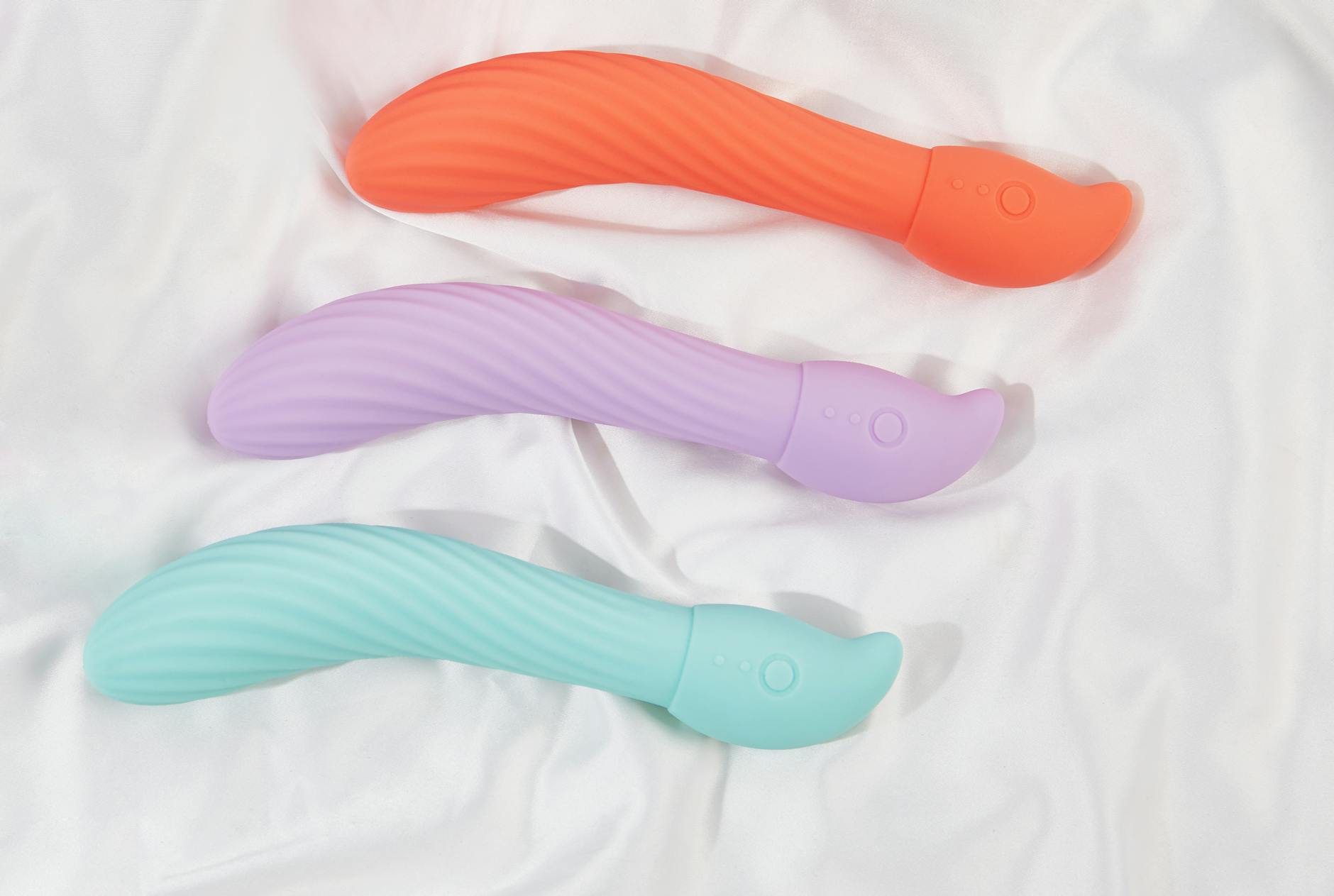
Photo by IFONNX Toys on Pexels
Common mistakes people make with their lemon vibrator
Starting too high. I keep saying this because it's the number one reason people end up disappointed. Your nerve endings need time to warm up. Start low.
Staying in one pattern forever. Your lemon clitoral vibrator has multiple patterns for a reason. Use them. Novelty is part of what keeps pleasure interesting.
Not taking breaks. If you feel numbness creeping in, stop for 30 seconds. Seriously. Your sensation comes back if you let it rest. Pushing through just teaches your body to check out.
If your pleasure has flatlined after long-term use of your lemon vibrator, you might benefit from reading about how to use a lemon vibrator long-term without numbness. Sometimes the solution isn't a new toy. It's a better relationship with the one you have.
Exploring what different settings unlock for you
Your body is not anyone else's body. What I'm describing is framework, not gospel. You might find that pattern 2 gives you better orgasms than pattern 4. You might prefer starting at intensity 4 instead of 2. You might discover that 8 minutes is your perfect window instead of 15.
That's information. Use it. Build your own map of what works.
Start with a shorter session. 10 minutes. Try each pattern at each intensity level. Notice what feels like "yes" versus "meh" versus "too much." Write it down if you want to remember it. Most people find their preferences click into place after 3 to 5 experiments.
Then, once you know your baseline, start playing with combinations and timing. That's when your lemon vibrator stops being a toy and becomes an actual tool for deeper self-knowledge.
People also ask
What's the best intensity setting for a beginner with a lemon vibrator?
Start at pattern 1 or 2, intensity 1 or 2. Seriously. It feels like almost nothing compared to what you might expect, but that's the point. You're letting your body warm up and your nervous system register the sensation. After you've gotten comfortable at lower intensities for a few sessions, bump to intensity 3 or 4. Build gradually. The people who skip this step often end up frustrated because they numb out fast.
Can I use the same setting every time, or do I need to switch it up?
You can use the same setting forever if it works for you. But most people find that after a few weeks of the same pattern and intensity, the sensation gets a little flat. It's not numbness exactly. It's just that your nervous system has adapted. Switching patterns every few sessions keeps things fresh and your nerve endings responsive. Think of it like listening to the same song on repeat versus a playlist.
How long should I use my lemon clitoral vibrator in one session?
Anywhere from 5 to 30 minutes is normal, depending on what you're after. Quick release? 5 to 10 minutes is fine. Extended pleasure without orgasm? 20 to 30 minutes. Most people find their sweet spot is 12 to 18 minutes because that's long enough to really get into it but not so long that sensation starts fading. Listen to your body. If it feels done, you're done.
Why does one pattern feel better than another?
Different patterns stimulate your nerve endings at different rhythms and cadences. Pattern 1 might hit a faster pulse that feels electric. Pattern 4 might be more rolling, which engages deeper tissue. Your nervous system literally responds to the rhythm. A fast beat feels different from a slow one. Some people are wired for fast rhythms, others for slow. Neither is better. Experiment and find yours.
What should I do if I feel numbness starting?
Stop immediately. Take a 30 to 60 second break. Your sensation will come back. Then when you resume, either drop the intensity or switch to a different pattern. If numbness keeps happening within 10 minutes, you're starting too high. Reset to a lower intensity and build slower. Long-term numbness is worth discussing with a healthcare provider, but acute numbness during a session just means you need a gentler approach.
Is it normal to prefer one pattern over all the others?
Completely normal. You might find that pattern 3 at intensity 4 is your absolute favorite and you'd be happy staying there forever. That's great. You don't need to use every single setting. But it's worth trying each one at least a few times because sometimes your preference shifts based on your body's state that day, your stress level, or where you are in your cycle. Understanding how your lemon vibrator sensation changes during different hormonal phases can help you pick the best settings for your body right now.
The bigger picture
Your lemon vibrator is responsive to what you bring to it. The same device with the same settings creates wildly different experiences depending on your stress level, how rested you are, what's happening in your relationship, and what you're thinking about. Settings are the scaffolding. You're the thing that makes it real.
Start with the basics. Warm up low, build gradually, try different patterns. Notice what actually feels good to your body instead of what you think should feel good. Once you have that information, you're not just using a toy. You're fluent in your own pleasure.
That's the whole point.