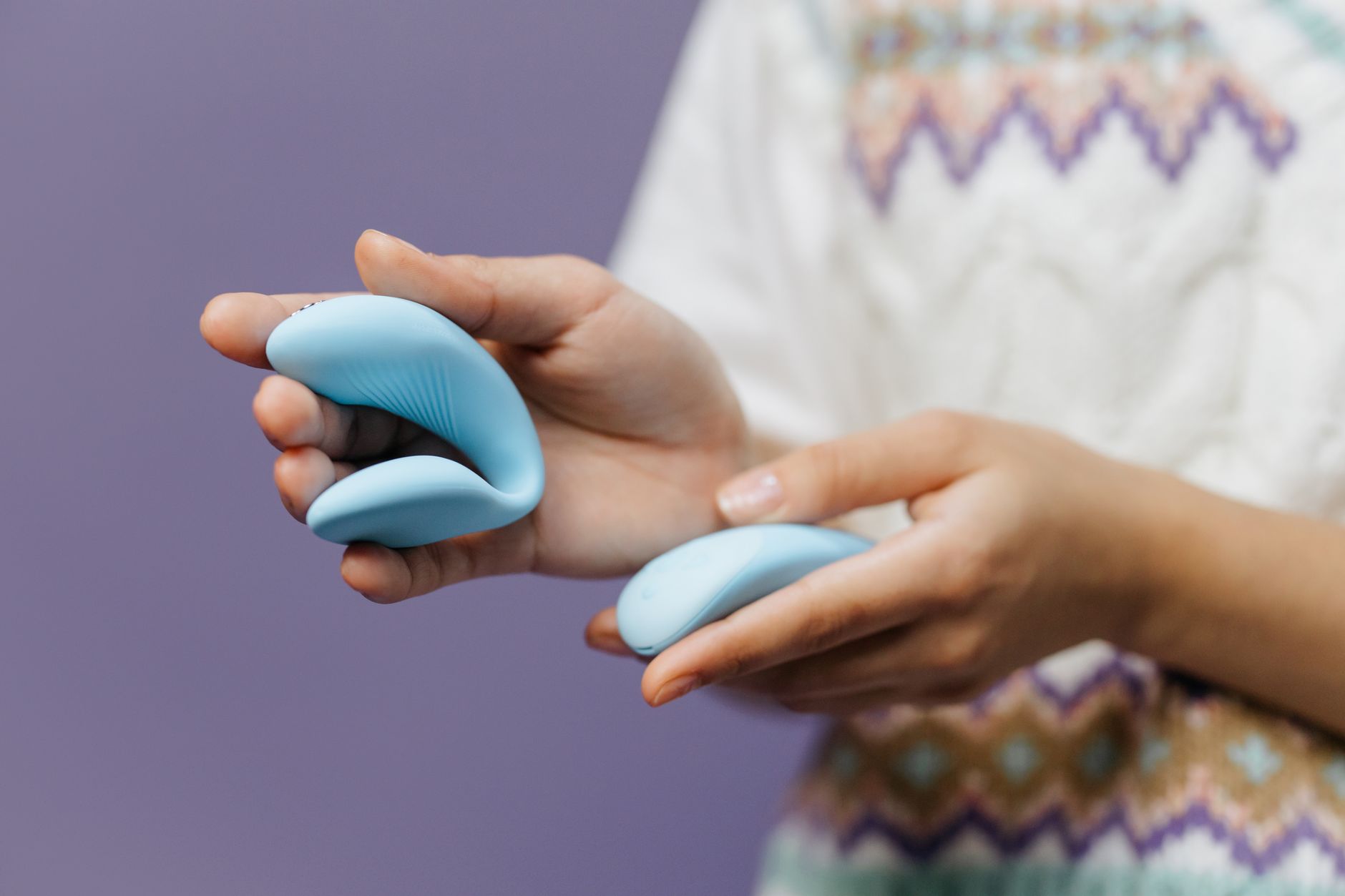
Your antidepressant is working. You feel clearer. You're sleeping better. You can leave the house without your chest tight. And then you notice that orgasm feels distant. Like you're watching it happen through glass instead of feeling it in your body. Or it doesn't happen at all. This is not failure, and it's not a sign the medication is wrong for you. This is a known pharmacological side effect affecting up to 60% of people taking serotonin reuptake inhibitors. The sexual dysfunction is real. The solution is also real.
Let me walk you through what's happening physiologically, why lemon clitoral vibrators and similar suction-based devices help when other toys don't, and how to rebuild sensation without guilt or shame.
Antidepressants work by increasing available serotonin in the brain. Serotonin is your mood regulator. It's also your pleasure limiter. The same mechanism that steadies your mood and stops intrusive thoughts dampens sexual arousal and orgasmic response across the board.
Here's what actually shifts in your nervous system. SSRIs flatten the arousal curve. Your body takes longer to transition from baseline to excitement. Once aroused, the intensity plateaus lower than it used to. Your orgasm, if it happens, feels muted. The involuntary muscular contractions that create that full-body sensation weaken. The brain's reward hit shrinks. You might feel the orgasm technically happening but experience almost no pleasure attached to it.
This is not psychological. This is not you "not being in the mood." This is chemistry. Specifically, serotonin's effect on dopamine (your pleasure neurotransmitter) and on the parasympathetic nervous system (the one that orchestrates sexual response). The dose matters. Some people on low-dose SSRIs notice almost no change. Others on standard doses experience dramatic numbing.
When sensation is already dampened, a standard vibrator asking you to feel its vibrations through increasingly numb tissue becomes frustrating fast. You're essentially turning up the volume on a speaker that's already broken. Harder vibration, faster speeds, more intensity. None of it lands because the neural pathway itself is muted.
This is where the design of devices like the Lem vibrator changes the game. Suction-based clitoral stimulation works through a completely different mechanism than buzzing. Instead of sending micro-vibrations through tissue, suction draws tissue into a gentle sealed chamber and releases it rhythmically. This creates stimulation through pressure and tissue movement rather than vibration.
Why does this matter when you're on SSRIs? Because suction engages larger nerve clusters. The feeling is broader, less dependent on fine sensory resolution. You don't need your clitoris to perceive a 9,000 Hz vibration. You need it to sense gentle pressure changes. That's something numbed tissue can still feel, even when specific sensation is dampened.
Think of it this way. A traditional vibrator is like someone tapping your shoulder very fast. If your sensation is numb, you might not register the taps. A suction device is like someone holding your hand and opening and closing their grip rhythmically. You feel the pressure shift even if fine touch is dulled.
Lemon sexual toys using suction technology activate the pudendal nerve and pelvic nerves through sustained pressure, not rapid stimulation. For people experiencing SSRI-related anorgasmia or low sensation, this is genuinely different. Multiple clients I've worked with report that suction-based devices were the first thing that felt like anything at all after starting medication.
The second mechanism at play is mechanical. Suction creates physical movement of tissue and blood, increasing local circulation to the clitoris itself. SSRIs can reduce genital blood flow. Suction partially counteracts this by literally pulling more blood into the area. You're not fighting the medication. You're working around its effects.
If you've just started an SSRI and your pleasure has flatlined, here's what to try before assuming the medication is incompatible with your body.
First: give it time. Sexual side effects often improve in the first 8-12 weeks as your body adjusts. Some people get 50% of their sensation back just by waiting. That doesn't mean you have to white-knuckle through for three months. Experiment. But don't panic at week two.
Second: switch to suction. If you have a traditional vibrator that's stopped working, lemon clitoral vibrators or other suction-based adult toys are worth trying before upgrading your medication. Start at the lowest suction setting. Your tissue is numb, not broken. Gentler is better.
Third: extend warm-up time dramatically. What used to take five minutes now takes twenty or thirty. This isn't laziness. Your arousal system needs time to climb under a neurochemical lid. Budget it. Build it into your schedule. Foreplay isn't a warm-up to the real thing anymore. It's the whole thing.
Fourth: address the psychological layer. SSRIs numb sensation. They also trigger grief, frustration, and a weird shame about the numbing (which is bullshit, by the way). You might be experiencing anorgasmia partly because your brain is in a secondary panic about the anorgasmia. That's a real phenomenon. Therapy, usually CBT or sex-positive therapy specifically, helps separate the chemistry from the anxiety.
If your sexual side effects are severe enough to affect your quality of life, your medication needs adjustment. This is information your doctor needs. You don't have to accept anorgasmia as the price of mental health.
Three options worth discussing with your prescriber are timing adjustment (taking your dose at night instead of morning to shift the window of maximum effect away from your sexual window), dose reduction (sometimes a slightly lower dose preserves efficacy while reducing sexual side effects), or switching to a different class of antidepressant (SNRIs like venlafaxine, bupropion, or mirtazapine have lower rates of sexual dysfunction than SSRIs in some people).
None of these conversations is dramatic. Your doctor has had them hundreds of times. You're not asking for anything unreasonable by saying "my sexual function matters to my overall wellbeing, and I'd like to explore options."
Here's the thing about SSRI-related numbness that therapy and medication adjustments don't always address. Your pleasure is not gone. It's muted. And muting is actually an opportunity to rebuild without performance pressure.
Many people spend years doing sex the way they were taught to do it or the way they thought they should. Starting an antidepressant and losing sensation can feel catastrophic. But it can also be a weird gift. You get to rebuild from zero without the accumulated expectations.
Start solo. No partner, no pressure, no timeline. Explore what suction feels like. Experiment with pressure, rhythm, placement. You're not trying to have an orgasm. You're trying to feel something, anything, different from baseline. That's the win. That's the data. When sensation returns (and for most people it does, especially with tools like lemon sexual toys that bypass traditional vibration), you'll have mapped new pathways.
If you're in a relationship, communicate the change explicitly. "My medication affects how my body responds. This is not about you or our connection. I want to explore together." That sentence changes everything. It reframes the issue from you being broken to you both problem-solving as a team.
SSRI sexual side effects have three possible trajectories.
One: they improve naturally over time as your body adapts. This happens for about 30% of people without any intervention.
Two: they stay stable but you find tools and techniques that work around them. This is where lemon vibrators and suction-based devices shine. You might not regain baseline sensation, but you rebuild functional pleasure within the new normal. Another 40% of people land here.
Three: they don't improve and require medication adjustment. This is legitimate too. Your mental health and your sexual health are both real. If one has to give, it's not automatically sex that loses.
Where you land depends on which SSRI, your dose, how long you've been on it, and your individual neurochemistry. There's no universal timeline. But there is a path forward from where you are right now.
I want to name something that doesn't get discussed enough. Antidepressants don't just affect physical sensation. They also affect desire itself. SSRIs can genuinely lower libido, not just sexual response. You might not want sex, not because you're depressed anymore, but because the medication is chemically muting the motivational pull.
This is different from arousal numbness. You can rebuild arousal through technique and tools. Desire is trickier. If you feel no pull toward sex at all, that's worth mentioning to your prescriber too. Sometimes a small dose adjustment or a switch helps. Sometimes it's about rebuilding desire deliberately through ritual and novelty.
The point: antidepressants are sometimes a straight trade-off between your mood and your sex life. That's real. And you get to decide if that trade is worth it. For most people, being able to function without depression is worth the sexual adjustment. But it's your decision, not something to accept silently.
No. SSRIs (sertraline, fluoxetine, paroxetine) and SNRIs like venlafaxine have the highest rates of sexual dysfunction, around 40-60%. Bupropion actually improves sexual function for some people. Mirtazapine has lower sexual side effect rates than SSRIs. If one class of antidepressant is causing problems, a switch might help without sacrificing your mental health.
Maybe. Some people experience significant improvement in the first 8-12 weeks as their body adapts. Others plateau and then improve over months. For some, sensation doesn't fully return without adjustment. You won't know your personal timeline without waiting or adjusting. That's frustrating, but it's the honest answer.
Because suction engages sensation through pressure and tissue movement instead of micro-vibration. When SSRI-related numbness dampens your ability to feel vibration, suction still creates perceptible sensation through a different nerve pathway. You're not fighting the medication's effects. You're going around them.
Maybe. Some people take medications like buspirone or bupropion as augmentation to reverse sexual side effects, but this is individual and not always effective. Talk to your doctor. Behavioral changes (extending foreplay, using different tools, longer sessions) also help for many people and have zero side effects.
Completely normal. You're mourning a real change in your body. You're also managing the strange cognitive dissonance of your brain working better while your body feels worse. That's a legitimate thing to process in therapy. It's not ungrateful to acknowledge both sides.
That's a complex conversation with your doctor, your partner, and possibly a reproductive psychiatrist. SSRIs at certain doses have been associated with small increases in certain birth outcomes, but untreated depression also affects pregnancy and postpartum. You don't automatically have to choose between medication and parenthood, but you do need specialized medical guidance to weigh the risks honestly.
Starting an antidepressant often means accepting trade-offs. Your mental health stabilizes. Your pleasure shifts. That's the deal. But shifting doesn't mean gone. It means different. And different is something you can work with, especially with the right tools and the right information.
If you're navigating SSRI-related numbness and you want to explore what a different approach feels like, hello noncy's lemon clitoral vibrators are designed for exactly this kind of sensory rebuilding. Or if you'd like to talk through how this sits with your specific relationship or body, reach out. Your pleasure matters. And there's a path forward that honors both your mental health and your sexual wellbeing.