Let's start with the thing nobody tells you
Arousal doesn't get worse after 40. It just gets slower. And that's not a flaw in your wiring.
Most people grow up thinking arousal should be this instant thing. You see someone attractive, you get turned on, done. But that model breaks around midlife, and instead of understanding why, we panic. We think our body is betraying us. We think we're broken. We're not. What's actually happening is neurological and hormonal, and once you understand it, you can stop fighting your body and start working with it.
What actually changes around midlife
Here's the plain version: After about 40, blood flow to the genitals takes longer to reach peak levels. For people with vulvas, this means vaginal lubrication takes more time to arrive. For people with penises, erections may take longer to achieve and might need more direct contact to maintain. Neither of these is dysfunction. Both are completely normal.
But here's the part that matters more than the physiology. The brain's arousal threshold also shifts. At 25, novelty alone could trigger a cascade of desire. At 45, your brain wants more. More context. More emotional connection. More actual stimulation. That shift is often wildly underrated. The women I work with in my practice who've figured this out report that their pleasure gets deeper after 40, not shallower. Because slower arousal forces you to actually pay attention.
Hormonal changes play a role too. Testosterone starts declining around 30 for most bodies, and it continues gradually as you move through midlife. For people with ovaries, the shift is more dramatic as estrogen fluctuates through perimenopause. The result is that spontaneous desire (the kind that just shows up) becomes rarer. Responsive desire (the kind that builds when you're actually being touched and engaged) becomes the norm.
This is not a problem. It's a redirect.
Why faster doesn't mean better
There's something useful that happens when arousal takes longer. You actually notice what's happening. You have time to let go of the work email. You have space to feel your body instead of running through a mental checklist. Your nervous system settles.
I've watched couples in their 50s discover that they're having better sex than they did at 30, not because anything got easier, but because they stopped expecting it to be automatic. They built in time. They got curious instead of frustrated.
That said, knowing something is normal doesn't make it easier to adjust to. If you've spent 20 years in a relationship with a certain rhythm, a sudden shift feels like something broke. If you've been single for a while and suddenly arousal feels sluggish, it's disorienting. The physical reality hasn't changed your worth or your capacity for pleasure. But it does change your timeline.
The practical adjustments that work
Four things shift what's actually possible:
1. Extended foreplay isn't optional anymore, it's essential. And I don't mean it in a "oh we should probably include more of that" way. I mean it needs to be the main event. Plan for 20 to 30 minutes of touch and stimulation before you expect arousal to peak. This isn't extra. This is the actual timeline your body now operates on.
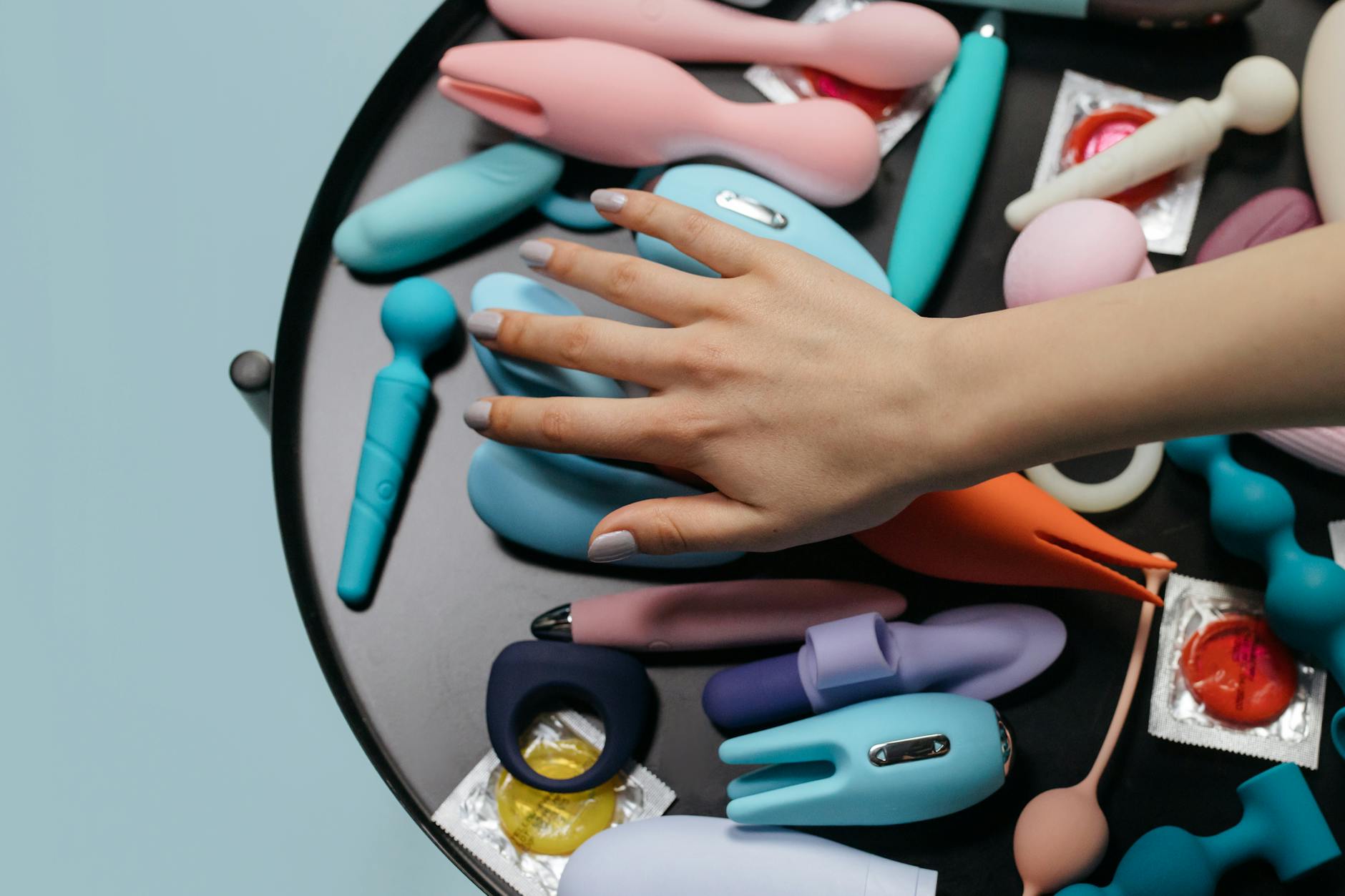
2. Direct clitoral stimulation matters more than it might have before. Penetration alone doesn't cut it anymore for most people. A lemon clitoral vibrator like the Lem is useful here because it gets you to peak arousal faster than indirect stimulation. You're not replacing the arc of pleasure. You're compressing the timeline so you're not stuck in the "waiting" phase indefinitely.
3. Mental state has to actually be clear. At 25, you could think about work and still get turned on. At 45, you can't. If you're stressed about money, resentful about the household load, or preoccupied with a conflict, your body won't cooperate. This isn't a flaw. It's your nervous system doing its job. The fix is either addressing the actual stressor or genuinely shifting your focus before sex, not trying to override your body.
4. Routine kills arousal more at this age than it ever did. This sounds counterintuitive. Most advice says "schedule sex," which is solid practical advice for busy couples. But if that scheduled sex happens in the same way, same room, same positions, your nervous system tunes it out. Novelty becomes neurologically necessary, not just fun.
How lemon vibrators specifically help
A lemon sucker or lemon clitoral vibrator doesn't force faster arousal. That's not how they work. What they do is apply specific, consistent stimulation to the most sensitive nerve cluster on your body. The clitoris has roughly 8,000 nerve endings packed into a small area. When you apply suction or vibration there, you're taking a shortcut to arousal that your natural responsiveness might need more time to reach otherwise.
This is especially useful if you're dealing with the shift from spontaneous to responsive desire. You can use responsive arousal patterns. Start with longer foreplay, eventually introduce a vibrator in the middle of that arc, and let it do what your body might be moving toward more slowly on its own. You're not replacing your natural arousal. You're complementing it.
Talking to a partner about the shift
If you're in a relationship and your arousal timeline just changed, your partner's probably noticed. The worst thing you can do is pretend it didn't happen or treat it like a personal failure. The best thing you can do is be direct.
Say it plainly: "I'm noticing arousal takes longer now. That's normal. Here's what helps." You can talk about the timeline. You can bring in tools. You can adjust positions or duration. But the conversation has to happen first, or you're both going to end up frustrated.
This is also where responsive desire becomes useful language. Explain that you can't necessarily jump into sex the way you used to, but once you're touched and engaged, you get there. That's different from not wanting to. That's just the new hardware.
The emotional part that matters more
Here's the thing I tell people in my practice: The shift in arousal timeline isn't actually about aging. It's about permission. After 40, a lot of people stop pretending they want sex they don't actually want in that moment. They stop having sex on someone else's timeline. They stop performing arousal they don't feel yet.
That's not a loss. That's a boundary.
The couples who struggle most through midlife sexual shifts are the ones who treat it like a problem to fix rather than a reality to adapt to. The ones who do better are the ones who use it as an opportunity to actually design the sex life they want instead of repeating the one they inherited.
Slower arousal isn't a bug. It's a feature that forces you to slow down, pay attention, and actually ask yourself what you want.
When to get help
If arousal takes longer but still happens, that's normal. If arousal doesn't happen at all, or if there's pain during the process, that's worth talking to a doctor about. Hormonal changes can sometimes require actual medical support. Low testosterone can be treated. Hormonal IUD side effects can be addressed. Medication side effects might be changeable. But none of that gets fixed by just trying harder or feeling worse about yourself.
If you're in a relationship and the shift is causing real friction, a couples therapist who specializes in midlife transitions can help you rebuild intimacy in a way that works for both of your bodies now, not the bodies you had at 25.
Your body at 40 or 50 isn't a downgrade version of your body at 25. It's a different model with different specs. Once you stop fighting that and start reading the manual, pleasure often gets better, not worse.
People also ask
How much longer does arousal actually take after 40?
It varies wildly, but most research suggests it takes an additional 10 to 20 minutes compared to what people report in their 20s. For some people it's longer. For others it's not the time that shifts as much as the kind of stimulation needed. The key is that "longer" doesn't mean "impossible." It means you need to adjust your approach, not assume something's wrong.
Can medications affect how fast arousal happens?
Yes, absolutely. Antidepressants, blood pressure medications, antihistamines, and a bunch of other common drugs can slow arousal or make orgasm harder to reach. If you started a new medication around the same time you noticed the shift, that could be the culprit. Talk to your doctor about whether alternatives exist.
Is slower arousal the same as lower desire?
No. These are two separate things. You can have plenty of desire but a slower timeline to show up physically. Or you can have lower desire overall. The distinction matters because the fixes are different. Slower arousal is usually about physiology or context. Lower desire is often about emotional disconnection, resentment, stress, or hormonal changes that need different support.
Does using a vibrator make it harder to orgasm without one later?
This is one of the most persistent myths. The answer is no. Using a clitoral vibrator doesn't desensitize you or create dependency. What it does do is show your body what kinds of stimulation feel good. That information doesn't disappear if you switch to a different type of stimulation. Your body stays capable of responding to many things.
Can you speed up arousal or is it just something to accept?
You can't usually speed up the biological timeline, but you can work smarter within it. Extended foreplay, removing distractions, bringing in direct stimulation like a lemon vibrator, and addressing any underlying stress or relationship tension all make the process feel faster because you're not fighting against your body's actual needs. You're meeting them.
Why does arousal feel different if I'm not in a relationship?
When you're single, arousal often depends entirely on your own mental state and body awareness. There's no external stimulus triggering response. That means solo arousal often takes even longer after 40 because it requires genuine focus and engagement. Foreplay with yourself becomes crucial. That's why many people find that adding tools like a lemon clitoral vibrator to their solo practice helps them access pleasure more reliably.
The reset that changes everything
If you're hitting this shift right now, you're probably looking for reassurance that something didn't break. It didn't. What broke was the model you were working from. Your body didn't fail. The 25-year-old arousal script just isn't compatible with midlife physiology.
Once you accept that and actually plan around it, everything gets easier. You're not chasing something that isn't there. You're working with what is. And weirdly, that's when pleasure often gets better.