
Let's be real about menopause and pleasure
Menopause changes pleasure. It absolutely does not end it. I say this because most people land in one of two camps: either "everything dries up and you're done," or "it's fine, don't worry about it." Both miss the point. Both leave you guessing instead of understanding what's actually happening.
Here's what I've seen in my work with couples navigating midlife transitions. The women who adjust fastest aren't the ones who pretend nothing changed. They're the ones who get specific about what did change, why, and what helps. That precision matters. It means the difference between feeling broken and feeling like you're playing an instrument you're learning to know again.
What estrogen drops actually do
Estrogen is the main player here. When it falls during menopause, vaginal tissue gets thinner, produces less natural lubrication, and loses some of its elasticity. Your clitoris doesn't shrink or lose sensation, but the tissue around it does shift slightly. The pelvic floor loses some of its estrogen-dependent support, which can mean orgasms feel different. Sometimes more localized. Sometimes less intense at the moment, but weirdly more satisfying after. It's individual.
Testosterone also drops. Yes, people with ovaries produce testosterone, and yes, it matters for desire and response. Some women feel it as a flattened libido. Others barely notice. That variation is real, and it's not in your head.
What doesn't change: the neural pathways for pleasure, the density of nerve endings in your clitoris, your brain's capacity for orgasm, or your ability to come hard. I've had clients in their 60s and 70s report the most intense orgasms of their lives. That's not a polite lie people tell me. It's a pattern I see consistently.
Why a lemon vibrator changes the game
A lemon clitoral vibrator like the Lem works differently than traditional vibrators. Instead of buzzing, it uses suction and gentle pulsing. That matters after menopause for a few reasons.
First, direct friction on thinned tissue can feel too intense or even uncomfortable. Suction bypasses that problem. It stimulates the nerve endings without requiring the same pressure, which means you get stronger sensation with gentler contact.
Second, the warm-up period gets longer after menopause. You're not broken. You just need more time. A lemon vibrator's lower initial settings (start at pattern 1 or 2) let you spend 15-20 minutes building arousal without the aggressive stimulation that older toys require. That slower climb often leads to deeper, more full-body orgasms.
Third, the consistency of suction stimulation is something many women find they actually prefer. There's no guessing about pressure or angle. The device handles the mechanics, and your brain gets to focus on the sensation itself.
Physical changes and what actually helps
Let me walk through the practical stuff because it matters.
Lubrication. Use water-based lube, always. Not because you're broken or damaged. Because thinner tissue benefits from extra glide. I recommend brands without added hormones, menthol, or warming agents. Something simple and quality-focused. A lemon vibrator works even better with a little lube.
Warm-up time. Budget 15-25 minutes instead of 5. This sounds long until you realize that most of us spent our entire sexual lives rushing. Menopause forces a slowdown. Once you stop resisting it, it often becomes your favorite part.
Lower starting intensity. If you've used vibrators before, your old settings might feel too much now. Start low. Let your tissue adjust. You can always turn it up. You can't unknow that something was too intense.
Pelvic floor awareness. Kegels, yes, but also their opposite. Learning to release tension in the pelvic floor is harder as estrogen drops, and it matters for both sensation and comfort. A pelvic floor physical therapist can teach you this in 2-3 sessions.
Relaxation, actually. This isn't flowery advice. Your nervous system has to shift from sympathetic (fight-or-flight) to parasympathetic (rest-and-digest) for orgasm to happen. After menopause, this transition can take longer. That's not a problem. It's information.
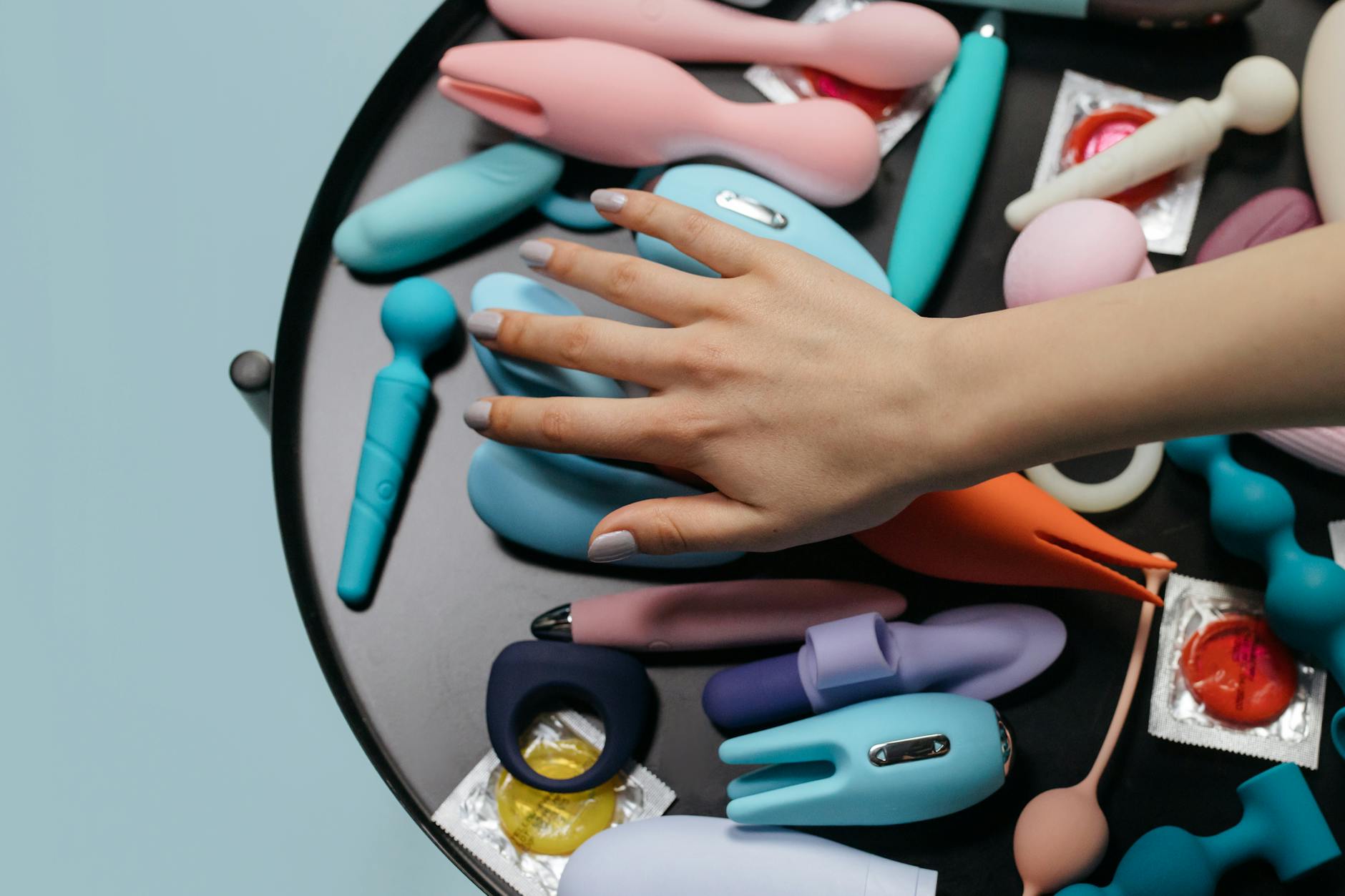
Photo by cottonbro studio on Pexels
The emotional piece is bigger than you think
Menopause often arrives with other midlife chapters. Kids growing up. Relationship shifts. Career changes. Grief. We tend to blame the hormones for everything. Sometimes they're the culprit. Often they're just the thing we can name.
If you're working with a partner, separate the conversations. "My body is responding differently" is not the same as "I need us to reconnect." Mixing them turns both into dead ends. One is physical. One is relational. They deserve separate attention.
Also, menopause has a weirdness about it. You suddenly have permission to stop performing. For decades, many women calibrate pleasure around a partner's rhythm, a partner's timing, a partner's satisfaction. Postmenopause, that pressure softens. You get to explore what you actually like, not what you think you should like. That's the thing nobody tells you. It's often the best part.
When something isn't just menopause
If pain shows up during sex, don't wait it out. Genitourinary syndrome of menopause (GSM) is real, treatable, and responds well to topical estrogen creams. A few weeks of treatment can transform the experience. A good doctor can prescribe this in minutes.
If desire has completely flatlined and isn't returning after a few months, testosterone therapy is worth discussing with a menopause-trained provider. It's prescribed cautiously in some regions, but it's available and often life-changing for the right person.
If you're experiencing pain with a lemon vibrator or any toy when you didn't before, that's also information. It might be tension, it might be GSM, it might be something else. A pelvic floor physical therapist or gynecologist trained in menopause can sort it out quickly.
The long-tail benefit nobody mentions
Here's something I've noticed working with couples: menopause often marks the moment when people stop hiding. You stop pretending to come. You stop faking interest. You stop performing the version of sexuality you think you're supposed to want. What's left is usually way better.
If you've never explored solo pleasure with a lemon clitoral vibrator, menopause is actually the perfect time to start. You know yourself better. You have fewer distractions. You have permission to take your time. A Hello Nancy lemon vibrator isn't just a tool. It's a way to map what you actually like without anyone else's timeline or expectations in the room.
If you're already familiar with clitoral vibrators, you might find that after menopause, a gentler approach works better. That's not a step backward. That's evolution.
FAQ: What people actually ask
Can I still orgasm after menopause if my sensation feels different?
Yes. The plumbing is different, but it's not broken. Orgasm depends on your brain, your nervous system, and the pleasure pathway. Menopause changes the approach, not the destination. Many women report that once they adjust to the new timeline, their orgasms feel different in ways they actually prefer.
Will a lemon vibrator feel better than the vibrators I used before menopause?
Often, yes. The suction-based design of a lemon clitoral vibrator works particularly well on tissue that's become thinner and more sensitive. The gentler approach usually feels more comfortable and often leads to stronger sensation. But this is personal. Some women prefer their old toys. Some switch to lemon sexual toys entirely. Start low, go slow, and notice what your body tells you.
How much lubrication do I need with a lemon vibrator after menopause?
A modest amount of water-based lubricant is usually enough. You're not trying to simulate natural lubrication that isn't there. You're giving the device a little glide. Many women find that a lemon sucker or vibrator actually works better with less lubrication than traditional vibrators because suction creates its own seal.
Is it normal for arousal to take longer after menopause?
Completely normal. This isn't a problem to fix. It's a rhythm to accept. That 15-25 minute warm-up period? It's often when the best stuff happens. The slowness can feel luxurious once you stop resisting it.
Should I try testosterone therapy before trying a lemon vibrator?
Not necessarily. Desire and pleasure are different systems. Many women find that a lemon clitoral vibrator actually helps rebuild desire because the experience of pleasure returns. That sometimes kicks arousal back online. If desire remains completely flat after trying a new approach with lube and a gentler vibrator, then a conversation with a menopause-trained doctor makes sense.
Can I damage my tissue with a lemon vibrator if I have menopause?
No. Lemon vibrators and other adult toys are safe when used as directed. The suction is gentle. Start at lower settings, use lubrication, and pay attention to how your body responds. If something feels uncomfortable, stop and try again another time. Pain is information. Sensation-stretching is fine. Pain is not.
What comes next
Menopause is not the end of your sexual life. It's a middle chapter, and in a lot of ways, the most interesting one. You've got decades of experience. You know what you like. You're past the point of performing for anyone. What's left is often richer, more intentional, and way more satisfying than what came before.
The women I work with who thrive in this transition are the ones who stay curious. They adjust their approach. They try new tools like lemon vibrators. They have honest conversations with partners or they explore solo pleasure without apology. They don't pretend menopause didn't change anything, and they don't let it convince them that pleasure is over.
Your body is changing. Your desires, your approach, your timeline. That's not loss. That's information. And once you have the right information and the right tools, you get to rediscover what pleasure actually feels like when you're not rushing.
If you have questions about navigating intimacy during menopause or want to discuss how to rebuild connection with a partner, reach out. That's what I'm here for. You deserve pleasure that matches who you are right now, not who you were.