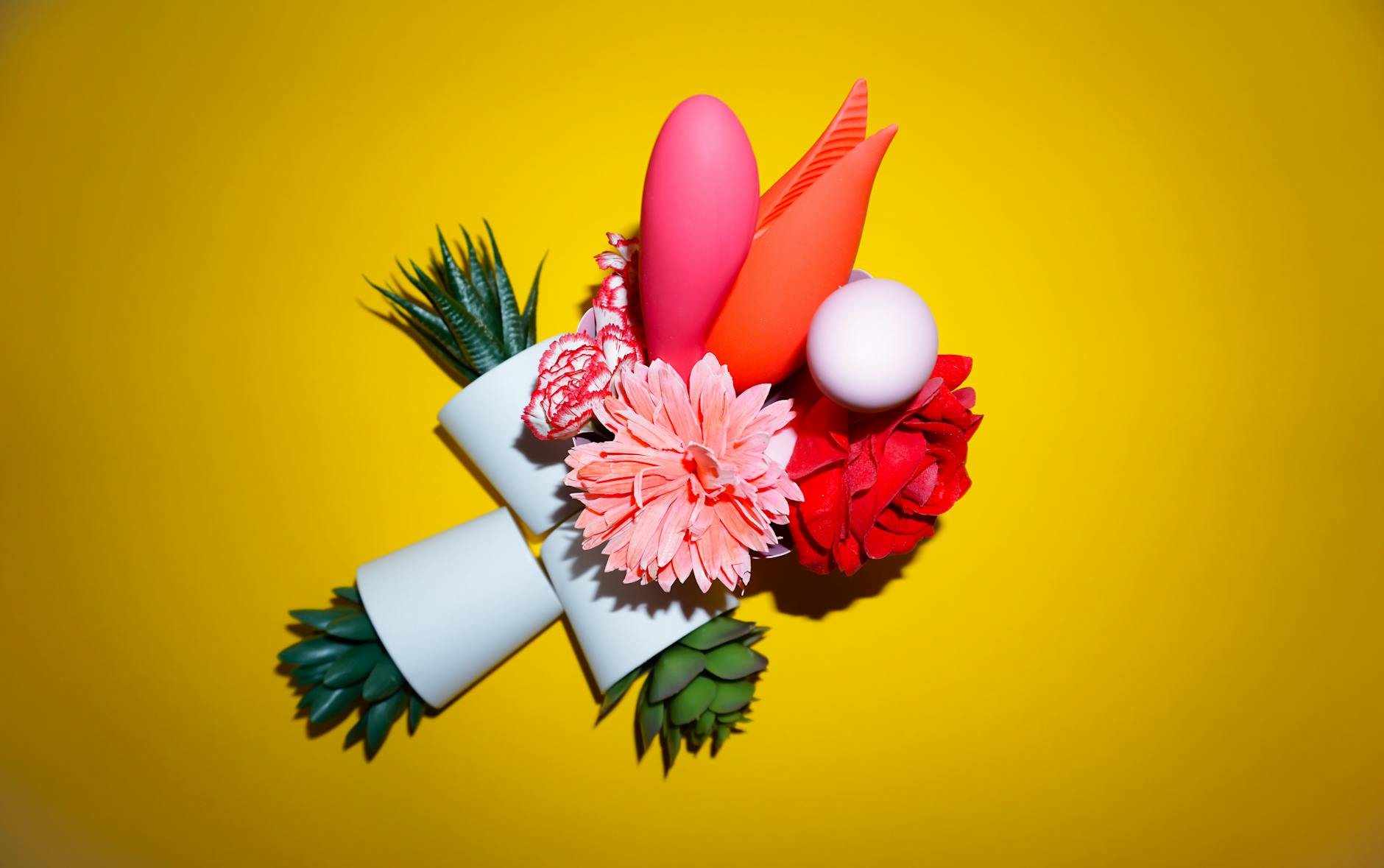
Let's be real about what stress does to your body
Long-term relationship tension doesn't just live in your brain. It lives in your nervous system, your pelvic floor, and your ability to feel pleasure. When you've spent months or years navigating conflict, hurt, or disconnection with someone you love, your body learns to contract. Literally. Your pelvic floor tightens defensively. Blood flow to your genitals decreases. Arousal takes longer to build, if it builds at all.
Most people assume orgasms are a brain thing. Wanting them is. But the actual intensity, the physical sensation you feel, depends on blood flow, muscle relaxation, and nerve sensitivity. Chronic stress locks all three of those down.
Here's the thing nobody tells you: fixing this doesn't require fixing the relationship first. In fact, rebuilding your own sensation often helps the relationship heal. You're not waiting to feel pleasure again. You're building it back intentionally, in your own body, on your own terms.
Why relationship stress crushes arousal
When you're in prolonged conflict with a partner, your nervous system stays in a low-level threat response. That's not dramatic or exaggerated. It's physiology. Your amygdala is on alert. Cortisol stays elevated. Your body deprioritizes reproduction and pleasure because it thinks there's a predator in the room.
Add in the emotional layer. Sex after a fight, or during an ongoing distance, comes tangled with resentment, self-protection, and the fear that you'll be rejected again. Your brain is running a background loop of "this isn't safe," and your body listens.
The pelvic floor is particularly sensitive to this dynamic. It's controlled partly by conscious movement and partly by your autonomic nervous system, which means it responds to emotional safety the way it responds to physical touch. If emotional safety has eroded, so has the pelvic floor's ability to relax completely.
When you can't relax the pelvic floor fully, orgasms feel weaker. Shallower. Sometimes entirely out of reach.
How sensation goes numb when stress is constant
Think of arousal like a dimmer switch. Normally, it gradually brightens as you get stimulated. Under chronic stress, the entire switch gets turned down. The same touch that used to trigger a cascade of sensations barely registers.
This isn't you being broken. It's your nervous system being protective. The problem is, once sensation goes numb, it's hard to rebuild it without intentional help. Solo exploration is one path. A tool designed specifically to stimulate nerves efficiently is faster.
A lemon clitoral vibrator, or lem vibrator, works differently than standard vibrators because of its suction mechanism. It doesn't rely on friction. It uses gentle pulsing pressure to stimulate the clitoral complex in a way that feels distinct from what your body has learned to tune out under stress. Because it's novel, your nervous system pays attention. Because it's concentrated, it overrides the numbness more effectively.
This is important: the stronger sensation isn't just about the toy. It's about breaking the nervous system's learned pattern of dampening down pleasure.
Rebuilding arousal after months of tension
Start with consent from yourself first. This isn't about performing for a partner or "fixing" yourself. This is about your own nervous system learning that pleasure is safe again.
Use the lemon vibrator alone, in a space where you don't have to listen for your partner or worry about interruption. Spend the first few sessions just noticing. Start on the lowest setting. Your body is probably used to tuning out sensation, so don't expect fireworks. You're teaching your nervous system to pay attention again.
Expect the first week to feel subtle. Maybe even disappointing. That's the numbness talking. By week two or three, as your nervous system realizes that this kind of stimulation is safe and is actually happening, sensation starts to sharpen. Orgasms often become more defined, more localized, more intense.
The reason this works is that you're not fighting against your partner's touch or your own defenses. You're giving your body a clear signal: pleasure is available. You're safe. Your nervous system gradually believes it.
What shifts when you take your pleasure back
Something unexpected often happens when you rebuild your own sensation intentionally. Your partner senses it. You move differently. You're less defensive about your body. You're more present during sex because you're not bracing for disappointment.
That shift alone changes the dynamic. You're no longer having sex while emotionally protecting yourself. You're having sex with someone who knows what feels good to them and is willing to experience it.
If the relationship itself is still tense, reconnecting with your own pleasure also gives you clearer information about what you actually need. Sometimes that leads to better communication. Sometimes it leads to the decision that this relationship isn't serving you. Either way, you're making that decision from a place of knowing what pleasure feels like, which is stronger than making it from a place of numbness.
The physical changes that happen in your nervous system
When you use a lemon sucker or other clitoral vibrator consistently over a few weeks, your nervous system doesn't just become more sensitive to that specific stimulation. It becomes more capable of arousal overall. Blood flow increases. Your pelvic floor learns to relax more completely because it's getting regular signals that sensation is safe.
Orgasms often become stronger not because you've become more sensitive in a vulnerability way, but because your muscles are actually relaxing and contracting more fully. That's pure physiology. More complete relaxation plus more complete contraction equals more intense sensation.
For people whose arousal has been suppressed by relationship stress, a lemon vibrator often becomes a kind of reset button. The mechanism is different enough from partner touch that your brain doesn't automatically run the defensive patterns it's learned. That psychological distance, paradoxically, helps you reconnect with your body.
When to bring your partner back in
There's no fixed timeline, but here's a rough guide. If you've been using a lemon clitoral vibrator solo for three to four weeks and you're noticing stronger, faster orgasms, your nervous system has started to reset. That's when you can consider bringing your partner back in.
You might use the vibrator during partnered sex. You might just use it solo and let that rebuild your general arousal capacity. You might talk explicitly with your partner about what you've learned your body responds to. The conversation itself often shifts. Instead of "nothing feels like it used to," you can say "here's what's working right now."
If the relationship stress is still acute, solo exploration is fine to keep doing indefinitely. This isn't about forcing partnership sex before you're ready. It's about your own nervous system getting a break from the task of feeling safe and starting to remember what pleasure feels like.
FAQ: Rebuilding sensation and intensity
How long does it usually take to feel stronger orgasms again after relationship stress? Most people notice a shift within two to three weeks of consistent use, a few times per week. Some feel it faster. The key is consistency, not intensity. Two short sessions per week is better than one marathon session. Your nervous system learns safety through repetition.
Can relationship stress actually prevent orgasms, or is it just in my head? It's real physiology, not just psychology. Chronic stress suppresses blood flow, keeps your pelvic floor contracted, and dampens nerve sensitivity. It's not in your head. It's in your nervous system. That said, rebuilding the relationship also helps rebuild sensation. The two aren't separate problems.
Will using a lemon vibrator make me less responsive to my partner's touch? No. If anything, the opposite. A lemon clitoral vibrator actually teaches your nervous system to become more responsive overall because you're breaking the stress pattern of dampening sensation. Once your body remembers what arousal feels like, you usually become more sensitive to all kinds of touch.
Should I tell my partner I'm using a vibrator to rebuild sensation? That's up to you and your relationship. Some couples find that discussing it opens the door to deeper conversations about what's missing. Some people prefer to rebuild sensation privately first. Both are valid. The rebuilding happens regardless. Disclosure is a separate choice.
What if my relationship stress is ongoing and unresolved? Rebuild your sensation anyway. Your pleasure is not contingent on your relationship being perfect. In fact, knowing what you need and what feels good is often what allows relationships to heal. If the stress is causing you to question whether you want the relationship at all, taking your pleasure back gives you clarity. You're not making big decisions from a place of numbness.
Does a lemon vibrator work better for this than other toys? Lemon vibrators and other clitoral suckers use suction instead of vibration alone, which creates a different kind of stimulation. For people whose sensation has been muted by stress, that novelty often helps break the nervous system's dampening pattern. Other toys work too. A lemon clitoral vibrator just tends to be efficient for this specific problem.
The bigger picture: pleasure as a form of reconnection
When long-term relationship stress has numbed your arousal, taking your pleasure back isn't selfish. It's an act of resilience. You're telling your nervous system that you deserve to feel good, regardless of what's happening in the relationship. You're rebuilding the internal resources that allow you to show up authentically, whether that's with your partner or on your own.
If you're navigating this right now, go slow. Use tools designed to be efficient. Let your body learn at its own pace. Stronger orgasms often follow naturally once your nervous system believes pleasure is safe again.