
Let's address the elephant in the room
You're 40, 45, or 55. You've never had an orgasm, or you had one once in your twenties and haven't managed to find one since. Maybe you thought you were broken. Maybe you figured it was just how your body worked. Maybe you spent decades faking it. Here's the truth: your nervous system isn't defective. You've just been working with the wrong equipment.
I've sat across from hundreds of people in your exact position. The pattern is almost always the same. They grew up in environments where pleasure wasn't discussed. They learned to prioritize their partner's experience. They were told to relax, which paradoxically made everything tighter. No one ever showed them a lemon vibrator, or explained how a lemon clitoral vibrator works differently than the toys they tried at 25.
Then they discover the Lem, or another quality lemon sucker device, and everything shifts.
Why lemon vibrators work when other things didn't
A traditional vibrator buzzes. It's direct stimulation through vibration alone. For some people, that works instantly. For others, that intensity can actually trigger numbness or tension rather than pleasure.
Lemon clitoral vibrators use a different mechanism entirely. They create a gentle suction and rhythmic pulse pattern that mimics the natural sensation of oral stimulation. This matters enormously for people who are starting from zero.
Here's what I tell my clients: imagine the difference between someone poking you repeatedly versus someone drawing you toward them. One is annoying. The other feels natural. That's roughly the gap between traditional vibrators and lemon sexual toys.
The Lem specifically uses patterns that build gradually. You're not getting maximum intensity right away. You're getting a slow accumulation of sensation that allows your nervous system to stay curious instead of bracing.
The permission problem nobody talks about
This is the invisible block that stops most people over 40. You weren't taught that your pleasure was worth pursuing. You were taught that sex was something you did for or with someone else. Your body got very, very good at staying quiet.
Using a lemon vibrator isn't just a physical act. It's a permission slip you're writing to yourself. It says: "My sensation matters. My curiosity matters. I'm allowed to explore this alone, at my own pace, without performing for anyone."
Many of my clients find that the first 3-5 sessions with a lemon clitoral vibrator don't result in orgasm. That's normal. What they do result in is data. You learn what you like. You discover parts of your vulva that feel good. You build a map of your own body.
The orgasm often comes later, once the nervous system has relaxed enough to let sensation accumulate.
How to actually start
Four practical things to do differently this time:
Get genuinely private time. Not rushed. Not half-listening for a partner or kid or roommate. A locked door and a solid 30 minutes where you have zero obligations. Your body will not relax if part of your brain is on guard duty.
Start with sensation, not outcome. Forget the orgasm entirely for the first few sessions. You're exploring. You're learning. The Lem starts at the lowest setting. You're learning what patterns feel good on different parts of your vulva. This is actually fun, once you drop the performance anxiety.
Use lube. Even if you think you don't need it. Lube changes the sensation. It lets things glide instead of stick. Many people over 40 have less natural lubrication, and that's not a problem, it's just information. Use water-based lube with a lemon vibrator.
Give yourself grace on the timing. This isn't a sprint. People who grew up disconnected from their bodies sometimes need weeks before things start opening up. That's not a sign something's wrong. That's how the nervous system works.
The pleasure paradox
Here's what happens with most of my clients: the moment they stop trying to have an orgasm and start paying attention to sensation, the orgasm often follows. It sounds like spiritual nonsense, but it's actually neurobiology.
Your brain can't be both anxious and relaxed. If you're lying there thinking "Is this going to work? Am I broken? Why isn't this happening?" your nervous system stays in fight-or-flight. Pleasure requires parasympathetic activation. Rest-and-digest mode. Curiosity mode.
When you switch from "Am I doing this right?" to "Huh, that sensation on the left side feels different," your nervous system is doing completely different work.
What changes once you find it
I want to be honest: having an orgasm at 45 after never having found one before is often not a small thing emotionally. It's not just a physical sensation. It's proof that your body works. It's proof you're not broken. It's proof that decades of a particular story about yourself might not be the whole story.
Some people cry. Some people laugh. Some people feel nothing special until the third or fifth time, and then suddenly it lands differently.
What almost all people notice: confidence in their own body shifts. If you found pleasure once, you'll find it again. You know it exists now. You have a map. The next time won't feel like guessing.
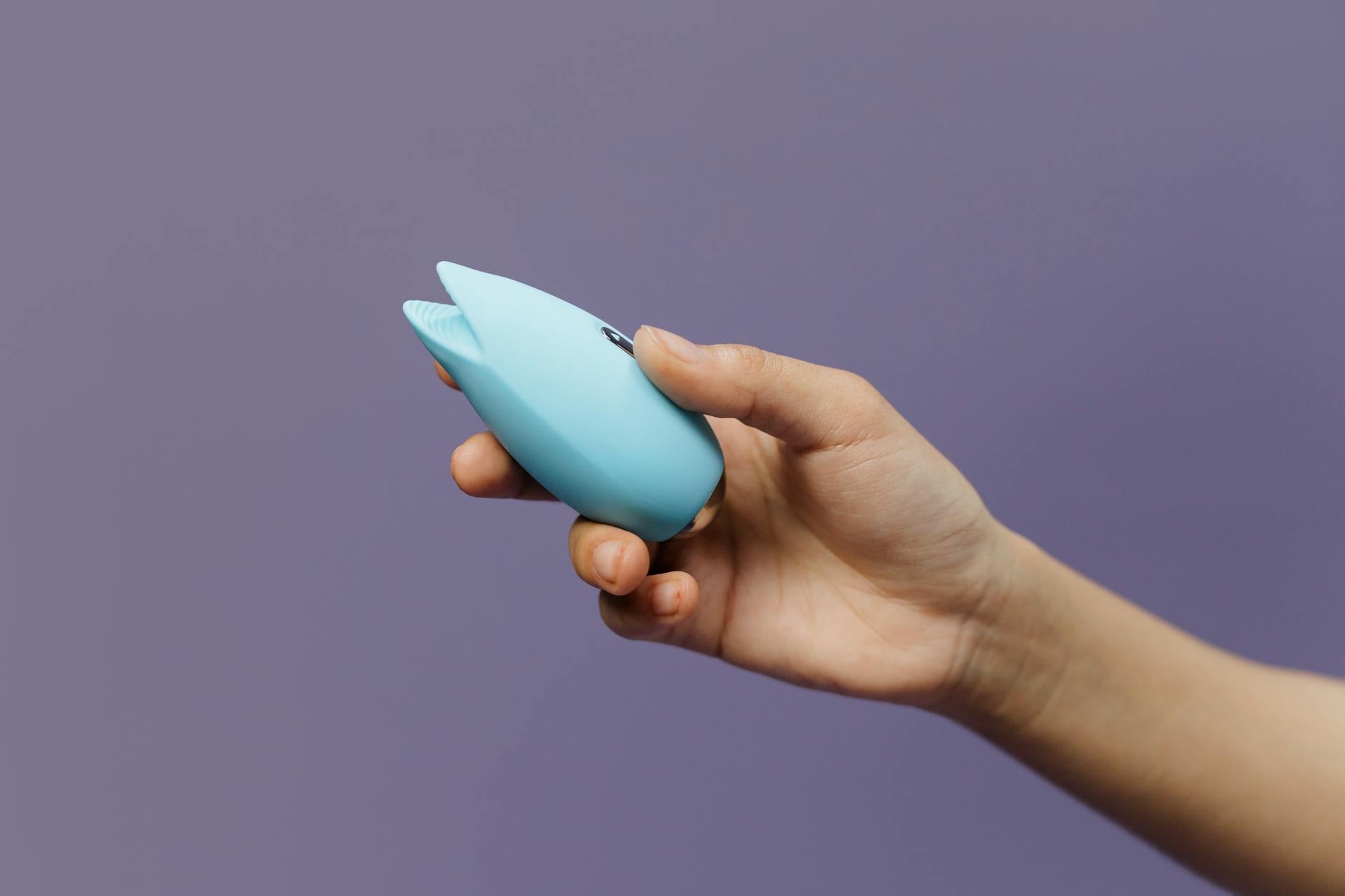
Photo by cottonbro studio on Pexels
Partner sex after discovering your own pleasure
This is the part that sometimes surprises people. Once you know what your body wants, sex with a partner often becomes better, not worse. You're not faking anymore. You can direct. You can say "harder" or "that side" or "wait let me move." You're present instead of performing.
Some partners find it hot that you know what you want. Some partners are relieved to stop guessing. Some partners feel insecure, and that's a conversation you get to have from a place of strength instead of confusion.
If you've been partnered the whole time, introducing a lemon vibrator into shared sex isn't a criticism of your partner. It's an addition. Tools expand possibilities. They don't replace connection.
Common questions that come up
Will I get desensitized if I use a lemon vibrator a lot? Not from lemon clitoral vibrators the way you might from intense vibration. The suction mechanism works differently. That said, anything you do repeatedly, you become less sensitive to. The solution is varying patterns and taking breaks. Use setting 2, then try setting 4 next time. Mix in manual touch.
Should I use a lemon vibrator alone or with a partner first? Either is fine. Some people need solo exploration first to feel safe. Others like having a partner there. Neither is wrong. Solo first is often easier because there's zero performance pressure.
How long does it usually take? That depends entirely on your nervous system history. Some people have an orgasm the first time. Some people take weeks. Both are normal. Weeks actually often means your nervous system is healing something deeper.
Is it weird to start using a lemon vibrator at 40+? No. The late-discovery orgasm crowd is bigger than you think. And honestly, your 40-year-old self is smarter about communication, more comfortable with her own body, and less concerned with judgment than your 25-year-old self. You have advantages.
The thing I tell everyone
Your past doesn't determine your pleasure. Just because you didn't have orgasms for 30 years doesn't mean your body is incapable. You were working with different information, different tools, different circumstances. A lemon vibrator, and the permission you give yourself to explore with one, actually changes the nervous system. It's not magical. It's biology.
You're not starting from a deficit. You're starting from curiosity. That's actually a much better place to begin.
FAQ
How do I know if I'm having an orgasm versus just feeling good?
Orgasms usually have three signs: involuntary muscle contractions (often in the pelvic floor), a peak of sensation followed by a release, and a distinct wave pattern. Not everyone feels all three. Some people describe it as a single moment of intensity. Some describe waves. If you're not sure, you probably haven't had one yet, and that's fine. You'll know when it lands because it's noticeably different from just pleasurable sensation. Your body will tell you.
Should I watch porn while using a lemon vibrator?
Not necessarily. Many people over 40 discover they actually prefer sensation without visual distraction. Porn can activate performance anxiety (am I doing this right? does this look right?) instead of relaxation. Try both ways. Some people need visual stimulation. Others find it's actually a barrier. Your body will tell you which serves you.
Will my partner be threatened if I have an orgasm with a lemon clitoral vibrator but never had one with them?
Maybe. That's real. The conversation to have is: "This isn't about you or your abilities. This is about my nervous system needing a different type of stimulation." If your partner can't hear that, the issue isn't the vibrator. The issue is your partner's insecurity, which is something to address separately. A lemon vibrator is a tool. Your pleasure is not a threat to their worth.
Can you use lemon sexual toys with hormonal birth control?
Yes. Your birth control won't affect how a lemon vibrator works. You can use one on any form of birth control, or none.
How do I introduce a lemon vibrator to my routine if I've never had one before?
Start with solo exploration. Give yourself 3-4 sessions alone before adding it to partnered sex. You'll learn your settings and patterns that feel good. Then, if you want to include it with a partner, you'll know what you like. Communication is everything. Tell your partner: "I want to explore this tool alone first, and then maybe we can play together."
Is it normal to feel emotions come up when using a lemon vibrator for the first time?
Completely normal. Your body holds a lot of history. Pleasure, touch, and permission can all trigger old stories. You might cry. You might feel grief. You might feel relief. All of it is information. It's actually healing. If you have a strong emotional response, that's not a sign something's wrong. That's your nervous system processing something deeper.
You deserve this
There's no age limit on discovering pleasure. There's no shame in starting now. The most important tool you have isn't the Lem or any other lemon vibrator. It's the decision to prioritize your own sensation, your own curiosity, your own body's capacity for joy. Everything else follows from that.
If you have questions or want to talk through this journey, reach out to our team. We're here for this.