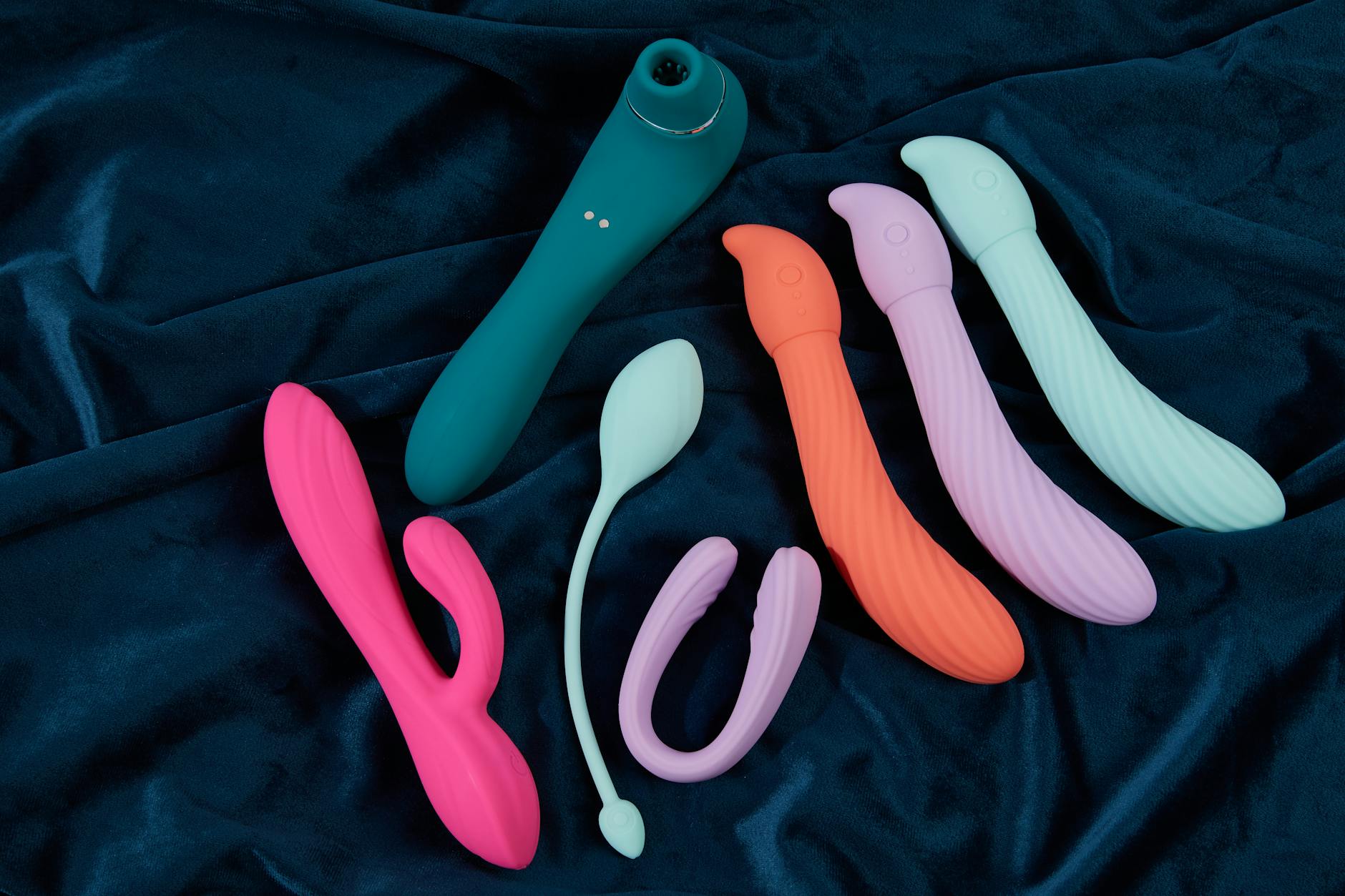
When Your Brain Sabotages Your Body
You're in bed. Everything should feel good. Instead, your mind is screaming: Am I taking too long? Does my partner think I'm broken? Will this even work tonight? Your nervous system shifts into high alert. Blood diverts from your genitals. Your body locks. Pleasure evaporates.
Performance anxiety during sex is weirdly common and rarely discussed. It shows up as the inability to orgasm, difficulty getting aroused, numbness, or a floating sensation where you're watching yourself rather than feeling yourself. The irony is brutal. The more you worry about pleasure, the more your body refuses to deliver it.
Here's what I've learned after two decades of working with couples: anxiety during intimacy isn't a personal failing. It's a nervous system in protective mode. And one of the most underrated tools for shifting that? A lemon vibrator.
How Your Nervous System Actually Works During Sex
Let me back up. Your autonomic nervous system has two gears. The sympathetic nervous system is your gas pedal. It triggers alertness, fight-or-flight, and in healthy doses, arousal. The parasympathetic nervous system is your brake. It's rest, digest, and crucially for sex, the state where real pleasure happens.
When anxiety creeps in, your sympathetic nervous system takes over. Your body is now in threat-assessment mode, not pleasure mode. Muscles tighten. Breathing becomes shallow. The mental chatter gets louder.
The magic of a lemon clitoral vibrator isn't that it forces pleasure. It's that the consistent, predictable sensation of suction and gentle stimulation gives your nervous system something specific to focus on. Instead of monitoring your performance, your attention narrows to the physical sensation happening right now. Your brain can't simultaneously catastrophize and feel a concentrated pulse of pleasure. One has to give.
Clitoral vibrators work faster and more reliably than manual stimulation for anxious bodies because they remove the variable of inconsistency. Your partner's hand speed might change. Your worry might spike. But a Lem vibrator on pattern 3 stays exactly the same, delivering predictability your nervous system craves when it's in high alert.
Why a Lemon Vibrator Feels Different When Anxiety Is Present
Sensation is grounding. Grounding is the fastest way to pull yourself out of future-focused worry and into your actual body.
When you're anxious, you're living in a story your brain is telling about what might go wrong. Vibration interrupts that story by forcing your attention into physical sensation. A lemon sexual toy with suction stimulation is particularly effective because it's different from what your hand or a partner's hand can do. It's novel. Novelty pulls your attention harder than familiar sensation.
Many clients tell me that using a lemon vibrator during moments of anxiety feels like permission to stop performing and start receiving. The toy removes the pressure to "do it right" because the toy is doing the work. Your only job is to feel.
I also recommend lemon suction toys specifically because they tend to build sensation gradually rather than shocking the system. If your nervous system is already in high gear, a sudden intense vibration can feel startling. The slow build of air-suction stimulation from a device like the Lem allows your body to acclimate and your parasympathetic system to gradually engage.
Using a Lemon Clitoral Vibrator as Part of an Anxiety Toolkit
Here's the practical part. If you're dealing with sex-related anxiety, a lemon vibrator alone won't fix it. But it's an excellent complement to other grounding work.
Start with your nervous system already somewhat regulated. If you're coming into intimacy already wound up, take ten minutes beforehand. Breathe deeply. Notice five things you can see, four you can hear, three you feel physically. This is basic grounding work and it actually works.
Then, when you're in intimate space with yourself or a partner, introduce the lemon vibrator as an anchor. Use it on a lower setting. Focus on the sensation without trying to rush to an outcome. If your mind wanders to performance thoughts (which it will), gently bring your attention back to the physical sensation. No judgment.
One insight that helps many of my clients: you don't have to orgasm for this to work. The goal is presence, not outcome. Many people find that the anxiety actually dissolves faster when you remove the pressure to climax. The orgasm often comes as a bonus once the nervous system has settled.
When to Involve Your Partner in This Process
If you're in a relationship, communication matters. Your partner isn't a mind reader and they might interpret a lemon vibrator as rejection. That's the opposite of what's happening.
Try saying something like: "I've been carrying some anxiety during sex. I'd like to try something that might help me be more present. Would you be open to that?" Then explain that you want to use a clitoral vibrator because it helps you ground your attention.
The best partners see this as information and a tool, not a threat. A Lem vibrator can absolutely be part of partnered sex. Some people use it during foreplay. Others use it while their partner is doing something else. There's no script. What matters is that both people understand what's happening and why.
Incidentally, if your anxiety is connected to feeling unsafe or unsupported in the relationship, that's a different conversation. A lemon vibrator won't fix relational trauma. A couples therapist can. But if your anxiety is about performance, body image, or the normal nervous system activation that comes with vulnerability, a tool designed to ground your attention can genuinely help.
The Nervous System Doesn't Rush
One more thing I want you to know. Rewiring your nervous system takes time. Using a lemon vibrator once might feel amazing. It might also feel weird or not work at all. That's normal. Your body might need several experiences before it stops bracing for danger and starts believing pleasure is actually safe.
Be patient with yourself. The fact that you're showing up and trying different approaches already signals that you care about your own pleasure. That matters. That's the foundation everything else builds on.
People Also Ask
Can a lemon vibrator actually reduce anxiety or is it just distraction?
It's both, and both are valid. Distraction itself is a legitimate anxiety-management tool. But a lemon clitoral vibrator does more than distract. The physical sensation activates your parasympathetic nervous system through a process called vagal toning. Consistent, predictable stimulation signals safety to your body, which gradually teaches your nervous system to downregulate threat response during intimate moments. Over time, that's not distraction. That's retraining.
What if I've never used a vibrator before and I'm nervous about starting?
Start alone. Use a lemon vibrator in private, when there's zero performance pressure. Get familiar with how it feels on different settings. You might discover you like pattern 2 better than the highest intensity. You might find that even just holding it while breathing helps. When you're comfortable with it solo, introducing it into partnered intimacy becomes much easier because you're not figuring out the tool and managing anxiety simultaneously.
Does using a vibrator make my body dependent on it for orgasms?
This is the myth that keeps people from trying one. No. Your body doesn't become dependent. What happens is your nervous system learns that pleasure is possible when you remove certain barriers. That's not dependence. That's learning. Many people who use lemon vibrators regularly find that their sensation improves across the board, including during non-vibrator sex, because the anxiety has lifted.
Should I tell my partner I'm using a lemon vibrator for anxiety?
If you're partnered and having sex together, yes. Honesty strengthens intimacy and removes secrecy, which often fuels anxiety. You don't need to frame it as a problem with your partner or the relationship. You can frame it as you wanting to show up more present and embodied. Most partners appreciate that clarification.
How often should I be using a lemon vibrator if I'm working through anxiety?
There's no prescription. Some people benefit from using one 2-3 times weekly as part of their grounding practice. Others use it less frequently. What matters is that you're showing up without pressure. If you start using it as a compulsive coping mechanism or feel like you can't function without it, that's worth examining with a therapist. But casual, self-directed use for pleasure and anxiety management is completely healthy.
Can I use a lemon vibrator if I'm on anxiety medication?
Yes. SSRIs and other anxiety medications don't prevent pleasure or make vibrators less effective. What matters is that you're working with a therapist or counselor about the anxiety itself. A vibrator is a tool, not a treatment. Medication and therapy are the treatments. The vibrator is one piece of the puzzle that helps you reconnect with your body while you're doing the deeper work.
Moving Forward
Performance anxiety tells you that pleasure is something you have to earn or prove. That's false. Your pleasure is inherently yours. It's not a test you can fail. Tools like a lemon clitoral vibrator exist to help you remember that when anxiety tries to convince you otherwise.
If you'd like to explore this further or discuss how anxiety is showing up in your relationship more broadly, consider reaching out to a therapist who specializes in sexual health or couples work. You can also connect with Hello Nancy's team at /contact if you have questions about how to use a lemon vibrator as part of your wellness practice.
Your nervous system wants to trust that intimacy is safe. Give it the chance.