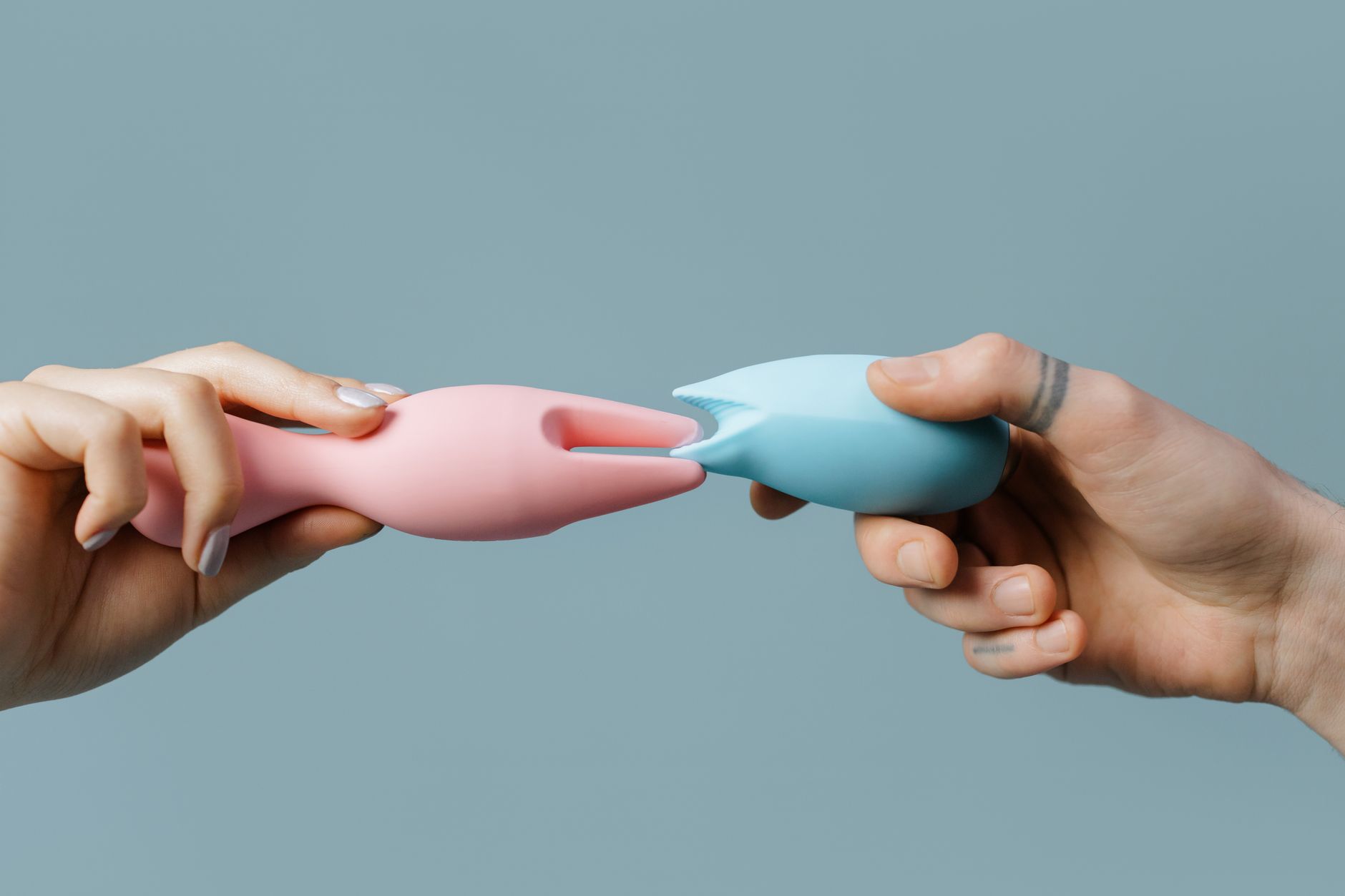
Let's talk about what happens to your body when you're nervous
Nerves are real. When you're with a new partner and the moment is about to get intimate, your nervous system can switch into a state that makes pleasure nearly impossible. Your breathing gets shallow. Your pelvic floor tenses. Blood flow redirects away from the areas you need it most. You might feel present one moment and completely checked out the next.
Here's what matters: this isn't a personal failing. It's not that you're "broken" or "hard to please." Your body is doing exactly what it's supposed to do when it perceives a threat. And newness, vulnerability, and the pressure to perform all feel like threats to your nervous system.
The good news is that lemon clitoral vibrators, with their unique suction-based stimulation, can actually interrupt this cycle. They work with your nervous system instead of fighting it.
Why standard vibrators often make anxiety worse
Most traditional vibrators rely on direct, sustained friction. When you're already tense, that sensation can feel overwhelming. You're focused on the feeling, then focused on whether you're taking too long, then focused on what your partner thinks about you taking too long. The vibrator becomes a symbol of pressure rather than pleasure.
A lemon vibrator works differently. Instead of penetration or heavy friction, it uses gentle suction pulses. The sensation is diffuse enough that it doesn't trigger that "performance monitoring" part of your brain. You can breathe. You can stay present.
This matters for nervous new couples because you're not adding complexity. You're removing it.
The specific ways suction eases partner anxiety
Three things happen when you introduce a Hello Noncy lemon vibrator into early intimacy with a new partner:
First, it shifts the focus. Instead of "Will I come?" or "Am I taking forever?", the question becomes "What does this sensation feel like right now?" Your attention moves from performance anxiety to curiosity. That shift alone changes your nervous system state.
Second, it removes the pressure from your partner to "do it right." New partners often worry they don't know what you like yet. If you're using a lemon suction toy, your partner isn't the one responsible for your pleasure. They're invited to participate, but the pressure is distributed. They can touch you, kiss you, or simply be present without the weight of "making it happen."
Third, it builds a shared language fast. Early relationship sex often involves awkward discussions: Where do you like to be touched? How much pressure? What pattern feels good? A vibrator lets you show, not tell. Your partner can watch what makes your body respond. You can guide the intensity. You're building knowledge together without needing words.
How to introduce it without making it weird
Timing matters. You don't bring out a lemon vibrator the first time you're intimate with someone new. You do it once you've been intimate a few times, you've felt fairly comfortable naked together, and there's at least one moment where both of you are relaxed.
Say something like: "I want to try something that might feel really good. I get a little in my head sometimes, and this helps me stay present." That's honest without over-explaining.
The second conversation is easier: "Can we use this together again?" By then, both of you know it works.
If your partner seems hesitant, ask what they're worried about. Often it's not about the vibrator at all. They might worry it means they're not enough, or that you prefer it to them. Those conversations matter, but they're separate from the vibrator itself.
Setting up your nervous system to actually relax
The vibrator only works if your body is calm enough to respond. Here's what I recommend to my clients:
Start slow. Spend 15 to 20 minutes on other things before you even touch the vibrator. Kissing, touching, being close. Let your breathing settle.
Use lube. Yes, even if you don't think you need it. Water-based lube is your friend because it reduces friction and takes pressure off your body to "perform" physiological responses. You're not there yet, and that's okay.
Keep the intensity low. The lemon vibrator has multiple settings. Start at pattern 1 or 2. Your nervous system needs time to recognize that the sensation is safe and pleasurable, not a threat.
Stay in your body, not your head. When you notice your mind spinning ("Is this taking too long?", "Do they think I'm weird?"), gently redirect. Feel the texture of the sheets. Notice your partner's breath. Feel the warmth of their skin.
What to expect the first time you use it together
Your body might not respond as quickly as you want. That's normal. Your nervous system is still learning to trust this new situation. Arousal might plateau, or it might disappear entirely for a moment. If that happens, pause. Breathe. Let your partner know you're not upset, just recalibrating.
Many people don't orgasm the first time they use a lemon vibrator with a new partner. That's not a failure. You're building comfort, not chasing an outcome.
What often happens instead is this: your breathing deepens. You feel less self-conscious. Your body relaxes into the moment. You notice what feels genuinely good rather than what you think should feel good. That's the win.
The conversation with your partner about what this means
If you're anxious about introducing a vibrator, your partner might be too. They might worry it signals that something is wrong, or that you're not satisfied.
Here's what I tell couples: introducing a tool isn't criticism. It's an invitation. You're saying "I want to explore this with you. I want us to figure out what works for both of us."
For anxious partners especially, that collaborative approach actually builds intimacy faster. You're not performing for them. You're discovering together. That's vulnerable in a different, deeper way.
If you've been with your partner for a while and are just now introducing a lemon clitoral vibrator, you might also want to check in about what's shifted. Did anxiety creep in over time? Are there relationship stressors? Sometimes the vibrator unlocks a conversation about what's really happening between you. That conversation is the real gift.
When to check in with yourself vs. a professional
If nervousness during sex is mild and situational (new partner, new context), a vibrator and this framework usually help. You'll notice your body relaxing within a few sessions.
If anxiety is severe, persistent, or if you have a history of trauma, talking to a sex therapist or trauma-informed counselor is worth it. A vibrator can be part of your toolkit, but it's not a replacement for processing deeper issues.
The same goes if you're using a lemon vibrator to manage anxiety and it's working, but you're still feeling generally disconnected from your body or your sexuality. That's often worth exploring with someone trained in somatic work or trauma recovery.
Otherwise? You're not broken. You're just learning how your nervous system works, and how to invite your partner to work with it rather than against it.
FAQs
Should I tell my new partner before we're intimate that I use a vibrator?
No need to announce it before you're even in bed together. Once you've been intimate a few times and you're comfortable, you can bring it up naturally. Say something like, "I'd love to try something with you." If they ask questions, answer honestly. If they seem reluctant, ask what's worrying them instead of assuming the worst.
What if my partner feels threatened by the lemon vibrator?
Often the worry isn't about the vibrator itself. It's about feeling replaced or inadequate. Have a calm conversation outside the bedroom. Explain that the vibrator helps you stay present and feel good, which means you'll actually be more available and responsive with them. Some partners need reassurance that they're still central to the experience. Others just need to see it in action once to understand.
Can a suction-based lemon vibrator help me if I have performance anxiety specifically?
Yes. Performance anxiety means you're focused on the outcome rather than the sensation. A lemon vibrator's gentle suction is less intense than traditional vibration, so it's harder to get stuck in your head about whether it's "working." Your body either responds to the sensation or it doesn't, but the lack of pressure often means it does.
How long should it take for me to feel comfortable using a vibrator with a new partner?
Every relationship is different. Some couples feel ready within a few weeks of being intimate. Others take months. There's no timeline. You'll know you're ready when you've felt at least somewhat comfortable naked together and you trust that your partner won't judge you. That foundation matters more than the number of dates.
Is it normal to not orgasm the first time using a lemon vibrator with a partner?
Completely normal. You're managing new sensations, new vulnerability, and maybe some residual anxiety. Your body might be responsive but not quite at that peak yet. Keep using it, and often the orgasm comes in the second or third session, once your nervous system has decided the situation is truly safe.
What if I can't relax even with the vibrator?
If a lemon vibrator isn't helping you calm down during sex, anxiety might be running deeper than new-relationship jitters. Consider talking to a therapist who specializes in sexual anxiety or intimacy. There's no shame in that. Sometimes the fastest path to pleasure is through someone who can help you understand what's really happening in your nervous system.
You're not behind, and your body isn't broken
Nervousness with a new partner is one of the most common things I hear about in my practice. It doesn't mean you're broken, or that you're "bad at sex," or that you don't like your partner enough. It means you're human, and your nervous system is doing its job.
A lemon vibrator is a tool that works with your biology instead of against it. It eases pressure, builds confidence, and gives you and your partner something to explore together. The first time you feel your body relax into pleasure with someone new, using a lemon clitoral vibrator, you'll understand why so many people swear by them.
Your pleasure matters. Your comfort matters. And you deserve tools that make both easier.