Let's start with what you actually want to know
Can a Lem vibrator or other lemon clitoral vibrator help ease period cramps? Yes. Not as a replacement for ibuprofen, but as a genuinely useful part of the toolkit. And if that sounds weird, you're not alone. The idea that pleasure could touch pain gets stuck between "that can't possibly work" and "too awkward to try." Both reactions are fair. But the biology is solid.
Here's what matters: menstrual cramps are a muscular problem. Your uterus is contracting to shed its lining. The worse the contractions, the worse the pain. Orgasm (and the minutes leading up to it) flood your system with oxytocin and endorphins. Oxytocin actually causes uterine contractions too. But here's the distinction. Orgasm-induced contractions are rhythmic, strong, and release immediately afterward. Period cramps are jagged, persistent, and exhaust the muscle. It's like the difference between sprinting and hobbling for miles.
How orgasm rewires period pain in your body
When you approach climax, three things happen in quick succession.
First, the pelvic floor muscles contract and release in waves. This triggers a chain of signals up your spine and into the parts of your brain that handle pain perception. The signal essentially says "you're in pleasure mode, not pain mode." Your brain prioritizes the pleasure signal. Pain gets quieter.
Second, endorphins flood the system. These are your body's natural opioids. They don't erase the cramp, but they muffle it. The pain is still happening, but you notice it less. Some people describe it as the cramp being there but somehow not bothering them.
Third, oxytocin levels spike. Oxytocin has a paradoxical effect on uterine pain. Yes, it causes contractions. But those contractions are different. They're synchronized, they resolve faster, and they actually help move the menstrual tissue out more efficiently. Less stagnation means less pain in the hours after.
The research here isn't huge, but it's consistent. A 2013 study published in Cephalalgia found that masturbation relieved period pain in about two-thirds of the women who tried it. A more recent analysis in the Journal of Clinical Medicine noted that vibration (the kind used in therapeutic devices) can modify pain signals in the nervous system. Put these together and you get a science-backed reason to try a lemon vibrator or other clitoral vibrator during your cycle.
Why a lemon clitoral vibrator works better than your hands during your period
There are three reasons.
Consistency. Your hand gets tired. A vibrator doesn't. Dysmenorrhea pain (the medical term for painful periods) often peaks in waves. You need sustained stimulation to get through each wave, and that's hard to maintain manually.
Frequency control. Different people respond to different patterns. The Lem and other quality lemon vibrators offer multiple speeds and patterns, so you can find what actually works for your nervous system on any given day. Some people find that starting slow and building up mirrors arousal naturally. Others need consistent, intense patterns to override the pain signal.
Hands-free relief. You can use a vibrator while lying down, using heat, or adjusting position without stopping the stimulation. Many people find that combining heat (a hot water bottle or heating pad on the lower belly) with vibration is more effective than either alone. Your hands are free for both.
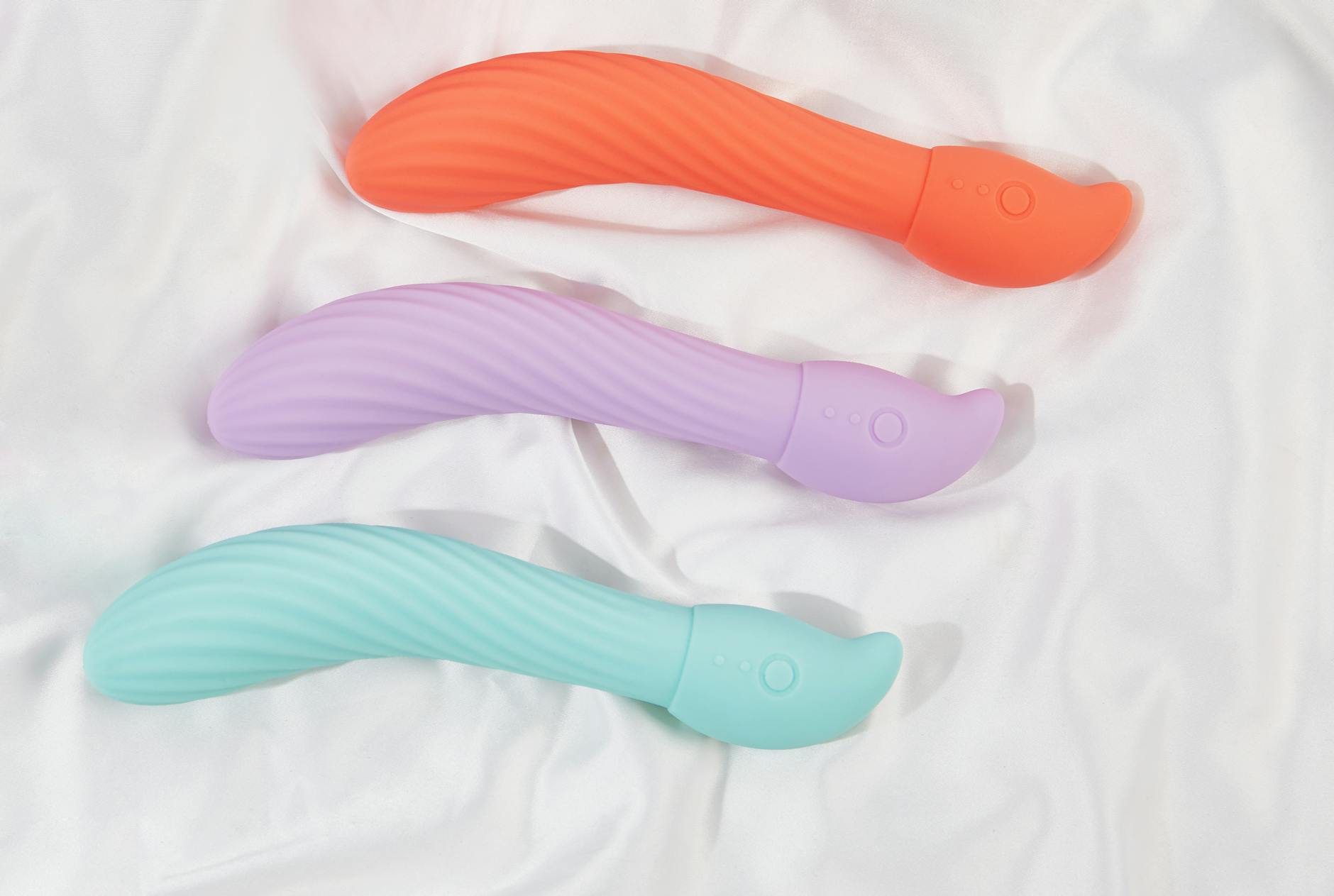
Photo by IFONNX Toys on Pexels
How to actually use a lemon vibrator safely on your period
Let's be real: using a vibrator while menstruating feels awkward the first time. It gets better.
Start with a barrier. Use a menstrual cup, tampon, or disc during the first few sessions if you're bleeding heavily or feel uncomfortable. This isn't medically necessary (there's nothing wrong with vibration plus blood), but it's a psychological permission slip that helps many people relax into it.
Use external stimulation only. The Lem and similar lemon adult toys are designed for clitoral use. The clitoris is external. You're not inserting anything, so there's no risk of pushing bacteria upward into the reproductive tract. Keep everything external and you keep everything safe.
Start gentle. Your pain threshold might be lower during your period. Begin on pattern 1 or 2 and increase intensity only if it feels good. Many people find that what works on day 3 of their cycle feels too intense on day 1. Honor that variation.
Give yourself 10-15 minutes minimum. The pain relief from vibration usually kicks in after a few minutes of stimulation. If you're stopping at 2-3 minutes, you're not giving it a real chance. Set aside actual time for this.
Combine it with heat. A heating pad on your lower belly while you use your lemon vibrator creates a two-pronged approach. Heat relaxes the muscle. Vibration and pleasure override the pain signal. Together they're more effective than either alone.
Know when to stop. If at any point it hurts in a sharp, localized way (different from the dull cramp you started with), stop immediately. You shouldn't feel pain, only relief or neutrality.
What the existing research misses
Most studies on pleasure and period pain focus on masturbation as a whole, not on vibrators specifically. This is partly because sex research is still underfunded and partly because vibrators have historically been stigmatized as a study subject. So what we actually know about lemon clitoral vibrators and dysmenorrhea is largely anecdotal.
But the mechanism is clear enough that we can extrapolate. If masturbation eases period pain through neurological and hormonal pathways, and if vibration modulates pain signals in clinical pain contexts, then a vibrator should theoretically do both things at once. The people reporting relief aren't placebo-ing themselves. They're using the same nervous system mechanisms that respond to heat, to ibuprofen, to physical therapy.
One thing worth knowing: this isn't a fix for severe dysmenorrhea. If your periods are truly debilitating, you need to see a doctor. Endometriosis, adenomyosis, and other conditions can cause pain that pleasure won't touch. A vibrator is a tool for menstrual discomfort, not a treatment for underlying pathology. Knowing the difference matters.
The other benefits no one talks about
Beyond pain relief, using a lemon vibrator during your period does something psychologically interesting. It reframes your relationship to your cycle. For years, the message is "your period is something that happens to you." It's an inconvenience, a mess, a thing to manage and hide. Using a tool designed for pleasure during your cycle is a quiet act of reclamation. It says your body deserves attention and care, even on the days it's uncomfortable. That reframing doesn't cure dysmenorrhea, but it changes how you experience it.
Many people also report that introducing vibration during their cycle makes them more attuned to their body's signals. You notice what pattern feels best. You pay attention to where the pain actually is, how it changes throughout the day, what makes it worse. That attention often leads to better overall period management.
When to talk to a doctor instead
If you're experiencing severe period pain that stops you from working, going to school, or living your life, vibration is not the answer. Talk to a gynecologist about whether something like endometriosis or adenomyosis is at play. These conditions need actual medical treatment.
Also see a doctor if your period pain has suddenly gotten worse (when it used to be manageable) or if it's completely new. Changes like that sometimes signal something that needs attention.
If you've never tried using a vibrator before and have questions about whether it's right for you, your doctor can give guidance based on your specific health context. Most gynecologists will tell you the truth: pleasure-based pain relief is safe and worth trying if you're interested.
For everyday menstrual discomfort, though, a lemon vibrator is a legitimate tool. It's not instead of ibuprofen. It's alongside it, or sometimes before it, or in combination with heat and rest. The point is to have options and to know what actually works for your body.
Frequently asked questions
Is it sanitary to use a vibrator during your period?
Yes. If you're using external clitoral stimulation only (like with the Lem or other lemon clitoral vibrators), you're not introducing anything into your vaginal canal. Menstrual fluid is sterile until it leaves your body. Using a barrier like a cup or tampon is optional and psychological, not a hygiene requirement. Rinse your vibrator afterward like you would any personal item. You're fine.
Can vibration make your period cramps worse?
For most people, no. Some people find that intense patterns feel overwhelming when they're already in pain, and they prefer gentler speeds. If you try it and it doesn't help or makes things worse, you stop and try something else. That's the whole point of experimentation. But actual harm from vibration is unlikely. The worst-case scenario is "it didn't do anything for me."
How long does the pain relief last after you use a vibrator?
Typically 15 minutes to an hour, depending on the person and the severity of the cramp. Some people report a longer window. Others find they need to use it again when the next wave hits. This is why pairing it with other methods (heat, ibuprofen, rest) makes sense. You're layering approaches to extend relief.
Can you use a lemon vibrator if you have a heavy flow?
Yes. Again, if you're using a device like the Lem for external stimulation, you're not inserting anything into your vagina. The amount of menstrual flow doesn't change this safety profile. If you feel psychologically more comfortable using a cup or tampon first, that's fine. But medically, it's not necessary.
Why don't doctors talk about this more?
Sex and pleasure are still stigmatized in medical education and clinical practice. Most doctors aren't trained to discuss vibrators as pain management tools. This is changing, especially among younger gynecologists and those trained in sexual health. If your doctor responds dismissively, you might ask directly: "Is vibration safe during my period?" The answer is yes. If they can't engage with that conversation, it might be time to find a provider who can.
Is this the same as a vibrator for vulvar pain conditions like vulvodynia?
Not quite. Vulvodynia is neuropathic pain that can be triggered by vibration. Period cramps are muscular and neurological pain with a different mechanism. Some people with vulvodynia can use vibrators fine. Others can't. If you have vulvodynia or a diagnosis of chronic pelvic pain, talk to your doctor before trying vibration. For straightforward dysmenorrhea (period pain without underlying conditions), lemon vibrators are generally safe and often helpful.
The bottom line
Your period pain is real. So is the science behind how pleasure can ease it. A lemon vibrator isn't a cure and it's not a replacement for medical care if something is seriously wrong. But for the regular ache of menstruation, for the days you're cramping and uncomfortable, it's a legitimate tool worth trying. Start gentle, give it time, combine it with heat and rest, and notice what actually works for your body. That's the whole game.
If you're curious about trying this approach and want more information about how to use pleasure-based tools safely, you can always reach out. We're here to answer questions without judgment. Your period is part of your body. Your pleasure matters even then, especially then.