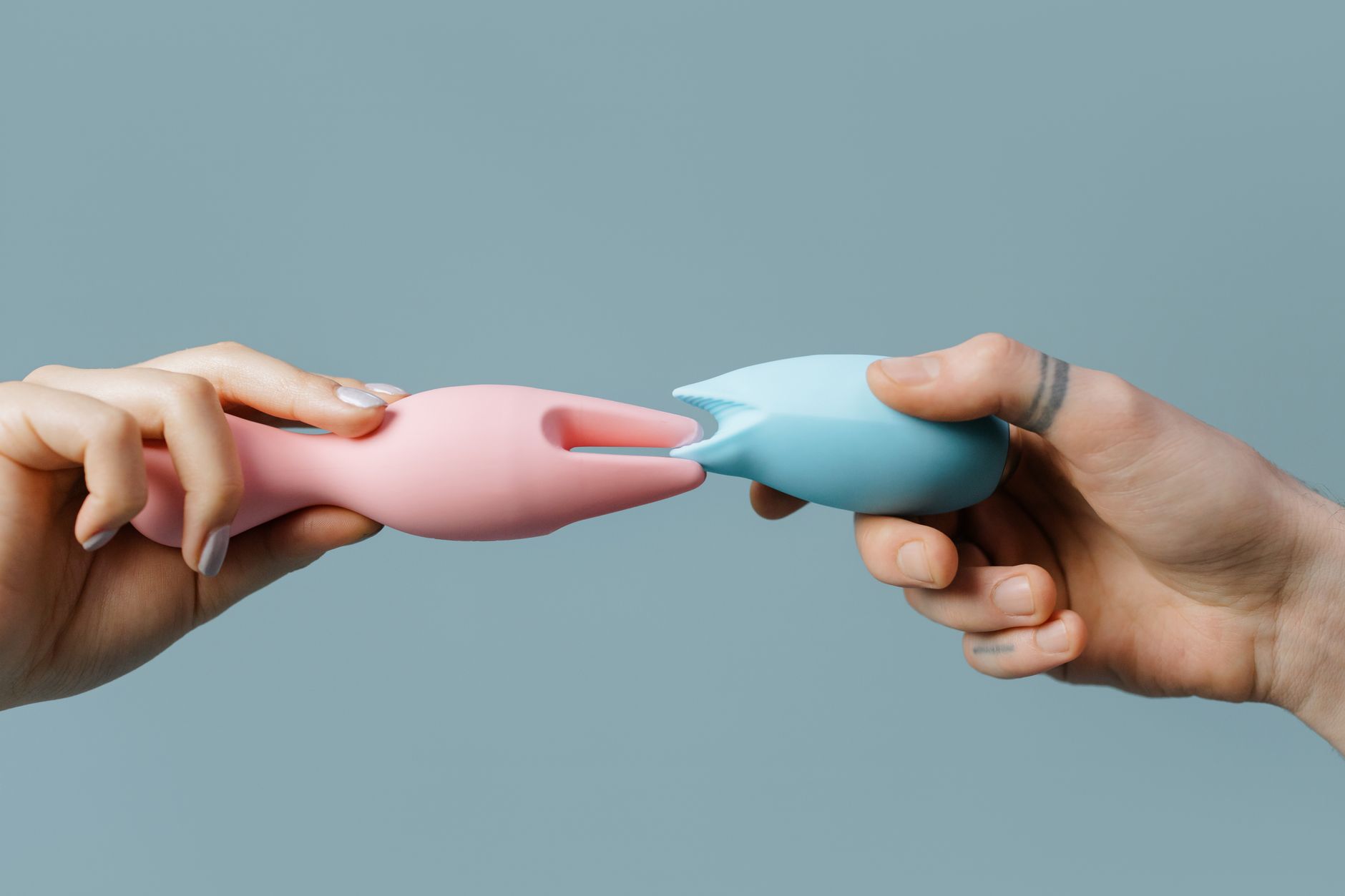
Here's the thing about partner awkwardness
Your partner wants to be involved. They really do. But somewhere between the idea of it and the actual moment, anxiety kicks in. They don't know where to hold it. They're worried about hurting you. They're unsure if you actually want them there or if you're just being polite. And honestly, that hesitation is actually the easiest problem to solve because it comes from caring, not from rejection.
Most of the couples I work with get stuck here not because the relationship is broken, but because neither person knows how to close the gap between "I want to try this together" and "okay, so what do I actually do with my hands right now."
Lemon clitoral vibrators like the Lem change this dynamic because they're small, intuitive, and tactile. They don't feel clinical. And because suction-based stimulation is genuinely different from penetration, it gives your partner a specific, active role that isn't mimicking what they're already doing.
Why the awkwardness exists in the first place
Most people grow up learning about sex through one narrow template. Penetration. Everything else is foreplay. So when a partner sees you with a vibrator, their brain sometimes reads it as "this is what you actually need, what I can't do, so maybe I'm not actually necessary."
That's the narrative running underneath the awkwardness. Not "I think vibrators are gross." It's "If I was enough, would you need this?"
Breaking that down requires two pieces. First, explicit reassurance that clitoral stimulation and penetration are different sensations, not competing options. Second, positioning your partner as an active participant, not an onlooker.
A lemon vibrator works here because it's small enough for your partner to hold and operate while staying connected to you. They're not sitting to the side. They're involved.
The conversation before you ever touch anything
Don't spring the vibrator on them mid-sex. Have this conversation beforehand, ideally when you're both clothed and not aroused. Framing matters massively.
Instead of "I want to use a vibrator," try: "I've been curious about trying something that might feel different. Would you be interested in exploring it together?" That language makes it collaborative, not a solo project they're watching.
Then be specific about what you actually want from them. "I'd love for you to hold it while we're touching," or "I think it would be hot if you used it on me while I'm touching you." Give them a role. Remove the guesswork.
Address the elephant directly. "I know vibrators can feel weird to bring in. For me, it's not about anything being missing with you. It's about trying a sensation I haven't felt before. And I want you there with me because it matters that it's us."
That last part isn't flattery. It's the truth your partner needs to hear.
The physical setup that removes awkwardness
Position matters. If you're lying on your back and they're kneeling beside you, they're already half-observing, not participating. Instead, try spooning from behind. Your partner is already touching you. The vibrator becomes an extension of that, not a third object in the middle of the bed.
Or sit facing each other with one leg between theirs. You're making eye contact. You're touching their chest or arms. The lemon vibrator is just a tool, not the main event.
Start with the lowest setting. Walk through what you're feeling. "Okay, that's a little intense, try pattern 2." Narrate your pleasure. This does two things. It gives your partner real-time feedback so they know they're doing it right, and it normalizes talking about sensation together.
Let them experiment a little. "Try moving it slightly to the left." "Hold it there for a second." This gives them agency and reminds you both that they're actively shaping the experience, not just holding a toy.
When your partner wants to use it solo on you
Some partners feel more comfortable with this version initially. They're not second-guessing their own touch. They're just learning a new tool. That's totally fine.
The only adjustment is to stay connected. Hold their hand while they're using it. Guide their pace by squeezing their hand or moving closer. Keep your hands on their body. You want the experience to feel like "we're doing this together" not "you're operating equipment on me."
When they seem confident (and you'll feel the shift in how they hold it), invite them closer. "Come here," as you pull them against you. Let the vibrator become part of the whole picture, not the whole picture itself.
This is where I see couples' hesitation dissolve. The moment your partner realizes they're not following a script, they're just participating in something that feels good for you both, the anxiety usually drops.
Handling specific insecurities (and they will come up)
If your partner says "I feel like I'm not doing enough," reframe it immediately. "You're holding me. You're touching me. You're watching my face. You're here. The vibrator is just one input, and you're controlling the whole experience."
If they ask "does this feel better than me," answer honestly but specifically. "It feels different. Like, you feel like pressure and closeness and your weight and your hands. This feels like this precise vibration. I want both. Not one or the other."
If they seem uncomfortable and want to stop, don't push. Pause. Check in. "What's coming up for you?" Sometimes it's genuine discomfort. Sometimes it's just needing a moment to adjust. Sometimes they just need permission to be a little awkward while they're learning.
One thing I tell partners in my practice: you're learning a new language together. Of course it feels awkward at first. That's normal. The awkwardness isn't a sign something's wrong. It's a sign you're trying something unfamiliar, which means you're growing.
Why lemon vibrators specifically shift this dynamic
Clitoral suction feels fundamentally different from penetration or even vibration alone. When your partner is introducing you to a new sensation, they're not trying to replicate something. They're exploring something genuinely novel together. That's a mindset shift.
Plus, because suction-based vibrators like the Lem are compact and need a light touch, your partner can hold it without looking or feeling clinical. It's not this large toy. It's this small, elegant thing they're gently positioning. And somehow that matters psychologically for people who are initially hesitant.
A lemon clitoral vibrator also sits in a weird psychological space. It doesn't look like a traditional vibrator. It looks like a piece of design. Some partners find it easier to engage with because it's not triggering whatever associations they had with adult toys from before.
The first time actually happens
Keep it short. Don't try to have the most amazing sex of your life the first time you're introducing a new element. Aim for ten minutes. Let them hold it. Let you both get used to the sensation without pressure to perform or reach orgasm.
If it feels good, great. If it's a little weird, that's also great. You're gathering information together.
After, actually talk about it. "What did that feel like from your side?" "What would you want to try differently?" "What did you enjoy?" This keeps the conversation open for next time instead of letting awkwardness calcify.
Most couples find that the second or third time is where genuine comfort shows up. The first time is just "okay, so this is what this is like." By time three, your partner usually knows what they're doing and you know what you like, and suddenly it stops being awkward and starts being genuinely intimate.
When it becomes a regular part of your intimacy
This is the shift I see in my practice. The lemon vibrator stops being "that thing we're trying" and becomes just part of how you have sex together. Your partner stops thinking about whether they're doing it right and just listens to your body.
That's when real connection happens. You're not self-conscious. They're not second-guessing. You're both focused on sensation and on each other.
Many couples tell me that introducing a vibrator actually strengthened their communication overall. Because learning to talk about what feels good with a toy, you start talking about what feels good without one. You start asking for what you want instead of assuming. You start paying attention to your partner's pleasure in a new way.
The awkwardness wasn't a bad thing. It was just a transition between two states. Before: you didn't know how to do this together. After: you do. And somewhere in that middle part where you're both learning, you usually end up closer.
People also ask
Should I bring up the vibrator or should they?
Whoever feels the desire should bring it up. If you're the one wanting to try it, you start the conversation. If they suggest it, that's a green light. The worst outcome is both of you waiting for the other person to mention it. Ownership matters. When you say "I want to explore this with you," you're not asking permission. You're inviting them into something you've already decided you want to experience.
What if they say no?
Then it's a "no," and you respect that. But usually there's a "no, not yet" underneath. Ask if it's the toy itself, the idea of introducing something new, or a different concern. Some partners need time. Some need more information. Some need reassurance. Rarely is it a hard no. Usually it's a "I need something from you first."
Can we use a lemon vibrator if we've never done anything like this before?
Yes. Actually, a lemon clitoral vibrator is a great entry point because it's not intimidating visually and the sensation is intuitive. Your partner doesn't need to know anything about vibrators to use one. They just need to listen to you.
What if using it together makes me anxious?
That's worth examining separately. If anxiety shows up during sex, it might help to work with a therapist on that before introducing new elements. Or, you might use the vibrator solo first to get comfortable with it, then invite your partner in when you feel grounded. There's no rush.
How do I know if my partner is actually enjoying it or just doing it for me?
Ask. "Are you into this?" You'll hear the difference in how they answer. And if they're not, that's okay. Some partners enjoy the role of giving pleasure, and some need to feel pleasure happening in their own body too. You might find that after a few times, once the novelty wears off, they relax more. Or you might find that this particular thing isn't their love language, and that's fine. You're looking for what works for both of you, not forcing what works in theory.
Is there an age where a couple shouldn't try new things together?
No. I've worked with couples in their 60s and 70s who were exploring vibrators for the first time. The awkwardness is the same at any age. The conversation is the same. The outcome is usually the same too: they get closer.