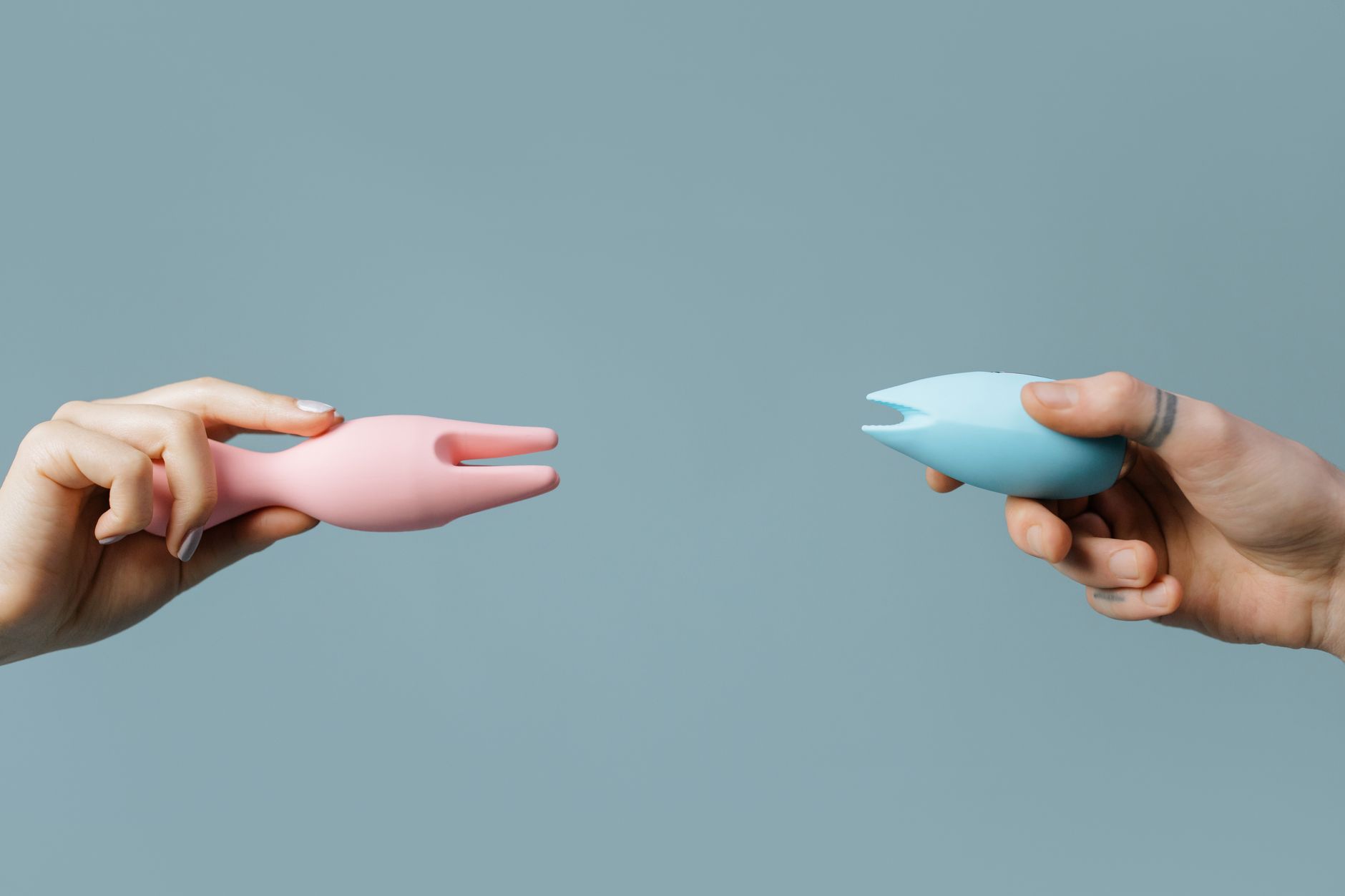
How to Use a Lemon Vibrator When Penetrative Sex Causes Pain After Childbirth
Postpartum pain during penetration is common, treatable, and doesn't mean your body is broken. Here's how clitoral vibrators can help you rebuild pleasure safely.
Penetrative sex after childbirth can hurt. Not the kind of discomfort that softens with time. Real pain. Sharp, burning, or persistent enough that you stop mid-motion and your partner feels the shift in your body.
Here's what I want you to know right now: this is so common that it's statistically normal, it's almost always fixable, and your body is not broken. What's broken is the timeline. You're being asked to resume intimacy before the tissues have fully healed or before the pelvic floor has learned how to relax again.
Clitoral vibrators, especially ones designed with gentle suction like the Lemon, offer a way forward that doesn't require you to push through pain or wait years for spontaneous improvement.
If you gave birth vaginally, your tissues experienced significant stretching. Even without a tear, the vaginal wall and perineum went through microtrauma that takes weeks to fully remodel. If you had a cesarean, the pain might come from deeper scar tissue, ligament tension, or yes, the incision site itself if it was lower.
But here's what most partners don't understand: the pain isn't just about healing time. It's about your nervous system recalibrating. After months of pregnancy and the intensity of labor, your pelvic floor often stays braced. It doesn't automatically relax. Your brain learned that this area was under threat, and it hasn't received the all-clear signal yet.
Add in sleep deprivation, the psychological weight of early parenthood, and the sheer physical exhaustion of recovering while caring for a newborn, and your body isn't in a state to register pleasure. It's in a state of survival.
The biggest mistake I see couples make is treating postpartum recovery as an obstacle course to get back to "normal" sex. They assume that if penetration is painful now, they need to endure it until it stops hurting.
This is backward. Pain during sex literally teaches your nervous system to tense up in anticipation. You're conditioning yourself to brace. Every time you push through discomfort, you're rewiring your pelvic floor to contract harder next time.
Clitoral pleasure via external stimulation bypasses this entire trap. A lemon vibrator gives your nervous system permission to relax. It separates pleasure from the site of pain. It lets you remember that your body can feel good without triggering the protective spasm.
That neural reset is not a detour. It's the actual treatment.
Unlike traditional vibrators that rely on rapid oscillation, lemon clitoral vibrators use suction technology. This matters because:
Your clitoris is surrounded by sensitive tissue that's often held tight by tension. A penetrative vibrator compounds the problem by activating the same pelvic floor muscles you're trying to teach to relax. Suction, by contrast, draws blood to the area and stimulates the clitoral glans without requiring internal tension. Your pelvic floor can stay neutral.
The gentleness also means you don't need a ton of arousal to feel something. Early postpartum, arousal can be flaky. Your hormones are still shifting. Your attention is fractured. A regular vibrator might require 20 minutes of mental foreplay before you feel anything. A lemon vibrator often works faster because the sensation is distinct and localized.
This translates to realistic recovery timelines. Instead of "we'll try penetration again in 6 weeks," you can be actively retraining your body within days.
First, check with your provider. If you're cleared for sexual activity, you're cleared to use a vibrator. This is not negotiable. The 6-week check is a minimum, not a guarantee.
Second, separate this from partner sex initially. The pressure to perform or the fear of hurting your partner adds cognitive load. Using a lemon vibrator solo gives you space to tune in without performing.
Third, create the conditions for arousal to actually happen. You're recovering from a major physical event while managing a newborn. Your nervous system needs permission to downshift. This means:
Choose a time when the baby is asleep and you're not operating on fumes.
Warm water or a warm compress on your lower belly can help pelvic floor muscles relax.
Start with gentle, slow breathing. Your pelvic floor mirrors your breath. Shallow breathing keeps it tight.
Use a water-based lubricant even though you're not penetrating. It removes any friction concern and signals to your nervous system that this is safe exploration.
Once you've spent a few weeks (or months) reconnecting with external pleasure via clitoral vibration, your pelvic floor has done the work. It knows how to relax. Your nervous system has filed away several experiences of pleasure without pain.
When you and your partner are ready to reintroduce penetration, start with fingers, not the penis. Have your partner enter slowly while you use your lemon vibrator on your clitoris. This does three things:
The external stimulation keeps your nervous system calm and focused on pleasure.
Your pelvic floor stays engaged with the clitoral work, so penetration feels less like an intrusion.
Your partner can feel when you tense and pause before pain starts.
If discomfort appears during this phase, stop. Don't push through. Back to external play for another few weeks. Pain is data. It's telling you the tissues or nervous system need more time.
Many couples find that integrating a lemon vibrator into partnered sex becomes a permanent part of their intimacy. There's nothing wrong with that. Your clitoris didn't stop being important after you became a parent.
Here's what gets overlooked: postpartum sex pain is tangled up in identity, autonomy, and resentment. Your body has been in service of pregnancy and birth. Your partner has been a support person. Now there's an expectation to switch back to being a sexual partner, and your body is saying no.
Sometimes the pain is also a boundary. It's your nervous system protecting something that still feels unsafe. This is less common than straightforward tissue healing or pelvic floor tension, but it happens. If you're two months out, tissues are healing fine, and penetration still triggers pain or shutdown, talk to a therapist. The tension might be emotional, not muscular.
Using a lemon vibrator in this context becomes its own conversation. It's you saying, "I want pleasure. I just don't want it to feel like performance or obligation right now." Your partner gets to see you reclaim sensation on your own terms.
If pain during penetration persists beyond 12 weeks postpartum, ask for a referral to a pelvic floor physical therapist. Not your regular OB. A specialist who focuses on postpartum recovery. They can assess whether the issue is scar tissue, nerve involvement, or muscular tension and treat it accordingly.
Also reach out if you notice pain improving with vibrator use but then plateauing. Sometimes there's an underlying factor like an infection or hormonal imbalance that responds better to medical intervention.
Your postpartum body deserves care that matches the reality of what it's been through. A lemon vibrator is a tool, not a substitute for that care. It works best alongside professional support if needed.
Postpartum sex pain feels permanent when you're in it. It's not. Your tissues heal. Your pelvic floor learns to relax again. Your nervous system rewires. Your identity as a sexual person doesn't disappear just because you're also a parent.
Clitoral vibrators like the Lemon skip the pressure to perform penetrative sex before you're ready. They let you rebuild arousal and pleasure on a timeline that matches your actual recovery. They work with your body, not against it.
You don't need to choose between being a parent and having pleasure. You just need tools that acknowledge where you actually are right now.
Check with your healthcare provider, but most are cleared for any sexual activity by 6 weeks postpartum (vaginal delivery) or 8 weeks (cesarean). Using a lemon vibrator is gentler than penetrative sex, so if your provider clears you for sexual activity, you can use one. Start slow and watch for any bleeding or increased pain. If either happens, pause and ask your doctor.
No. External clitoral stimulation doesn't interfere with tissue healing. In fact, improved blood flow and reduced pelvic floor tension can support recovery. The key is avoiding anything that triggers pain, which usually means avoiding penetration. A clitoral vibrator sidesteps this entirely.
Yes, often even more than for vaginal delivery. Cesarean recovery involves deep abdominal and pelvic tension. The gentle suction of a lemon vibrator can help signal to your nervous system that the area is safe while you're healing. Avoid placing any pressure directly on your incision site, and use external stimulation only.
If even gentle clitoral vibration triggers pain, stop and check with your doctor. This could indicate an infection, nerve damage, or hormonal imbalance that needs professional attention. It's also possible you're still too sleep-deprived or stressed for arousal to feel safe. Sometimes the answer is more time, not more tools.
Both have value. Solo exploration gives you space to reconnect with your own pleasure without performance pressure. Partnered use lets your partner see what feels good and builds communication around what your body needs now. Many people benefit from both phases in sequence.
Completely normal. Low libido after birth relates to hormones, sleep deprivation, and the massive psychological shift of early parenthood. This often improves over months as your system stabilizes. If interest doesn't return by 6 months postpartum or you feel distressed by the shift, talk to your provider. This might be postpartum depression or thyroid issues, both very treatable.