
The thing nobody says out loud
Desire mismatch isn't a sign your relationship is broken. It's a sign you've been together long enough that the initial synchronization has worn off. One person's libido shifts. Kids happen. Stress compounds. Hormones change. And suddenly you're not on the same page anymore, which feels like you're reading different books entirely.
Here's what I see in my therapy practice: couples assume the only fix is negotiation, compromise, or resentment. But there's a third option. A lemon vibrator solves a specific problem that neither partner talking harder can solve on their own: it lets the lower-desire partner control their own pleasure without pressure, and it lets the higher-desire partner feel wanted without their partner performing. That's the gap it fills.
Why desire mismatch happens in long-term partnerships
Most couples hit this wall around year five to ten. Here's why it's so common and why it's not your fault.
The hormonal reality. If one partner has been on hormonal birth control for years, their testosterone baseline is lower. If they've come off it, arousal suddenly ramps up unpredictably. Thyroid changes, antidepressants, perimenopause, diabetes, blood pressure meds. They all reshape desire. The person with a lower sex drive often isn't less attracted. They're biochemically different.
The attention economy. Early-relationship sex works because novelty creates arousal. You can't think about anything else. Years in, your brain is thinking about the mortgage, your kid's school schedule, the email you forgot to send. Desire requires mental space. One person has more of it. The other doesn't.
The performance trap. The higher-desire partner starts initiating more. The lower-desire partner, sensing pressure, becomes avoidant. Avoidance reads as rejection. Rejection triggers anxiety. Anxiety kills desire. Now you have a feedback loop that looks like incompatibility but is actually just bad timing and false signaling.
None of this means you're mismatched as people. It means your nervous systems are out of sync.
The lemon vibrator as a bridge, not a replacement
I want to be clear about what a lemon clitoral vibrator does and doesn't do in this scenario.
It doesn't fix desire mismatch. It doesn't make the lower-desire partner suddenly want sex as often. It doesn't solve the deeper emotional friction. What it does is create space for pleasure that's decoupled from performance and timing.
Here's the mechanism: the partner with lower desire can explore pleasure solo, which removes the pressure of satisfying a partner. They're not "supposed to" be aroused. There's no timeline. No watching a partner wait. No guilt. Just sensation. Separately, this can actually help them reconnect with their own desire, which often gets dormant under relationship pressure.
Meanwhile, the higher-desire partner can pleasure themselves with the knowledge that their partner is also engaged in pleasure, just differently and on their own terms. You're not choosing between "have sex together and feel disconnected" or "one person stays frustrated." You're both having your own experience, in the same room or same house, which feels way less lonely than the typical mismatch scenario.
This works because it's not a negotiation. It's not "you owe me this." It's "we're both taking care of ourselves, and that's hot."
How to introduce a lemon vibrator without it feeling like a "problem solution"
Timing matters. You don't lead with "I got this because we have a desire problem." You lead with curiosity.
Frame it as exploration, not a fix. "I've been thinking about getting something new for us to experiment with. Would you be interested in seeing it together?" That's wildly different from "We need to do something about your low sex drive." One invites. The other accuses.
Show them first outside the bedroom. A lemon clitoral vibrator is beautiful object design. It looks like nothing else. Pull it out over tea and just talk about it. "This is a suction toy. It works differently than vibrators. I've read people really like it for solo use." Let them get comfortable with the object before it ever goes near genitals.
Start with solo use in separate spaces. If the lower-desire partner is nervous, the worst thing you can do is watch. Suggest: "I'm going to do my own thing tonight in the other room. No pressure to join. Just see if you're curious." This removes the layer of being observed, which often kills arousal for the lower-desire partner.
Then gradually move toward mutual pleasure. Once both partners have used a lemon vibrator solo and felt less self-conscious about it, the conversation shifts. "What if we both used ours at the same time?" Suddenly it's not one person trying to keep up with the other. It's two people on their own pleasure journey, in parallel.
The emotional conversation that has to come with it
A lemon vibrator is a tool, but it's not a substitute for talking about what desire mismatch actually means in your relationship.
I usually coach couples through three conversations.
Conversation 1: Curiosity instead of blame. "What's changed for you around sex?" Not "Why don't you want me anymore?" Get specific. When did you notice the shift? What was happening in your life? Often you'll find out it has nothing to do with attraction.
Conversation 2: Pleasure independence. This one sounds weird at first, but it's powerful. "I want you to feel good. And I don't want that to depend on me. Can we both give ourselves that gift?" This is where introducing a lemon vibrator lands differently. It's not "you're not enough for me." It's "I want you to know what you like independent of what I need."
Conversation 3: Rebuilding touch. Once there's less pressure around sex, you can introduce touch that's not about performance. A massage with no expectation of it leading anywhere. Cuddling in the morning without anyone thinking "this should turn into sex." Touch without agenda often reconnects couples way faster than sex with agenda.
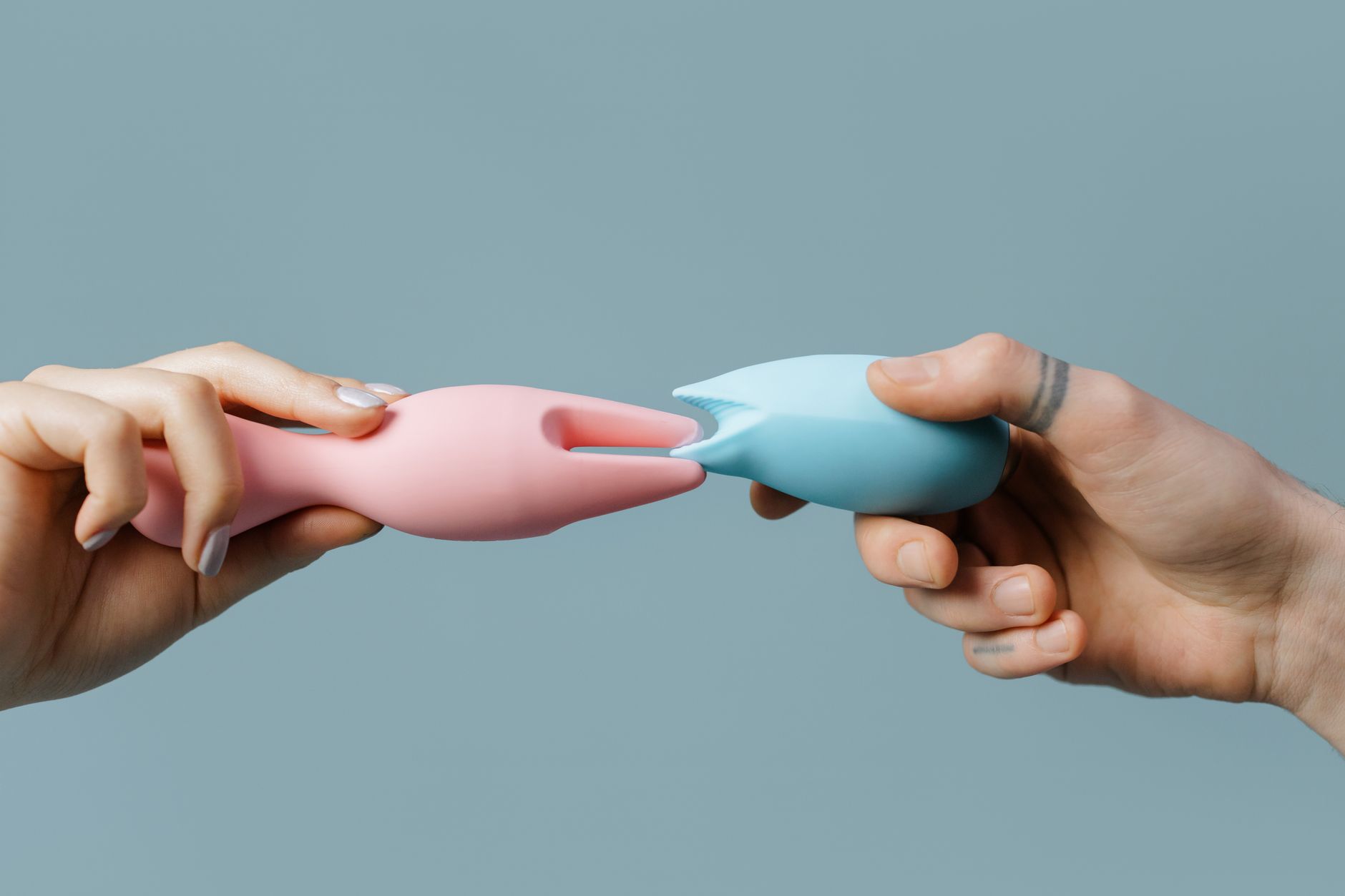
Photo by cottonbro studio on Pexels
Practical setup for using a lemon clitoral vibrator when desire mismatches
The logistics matter more than you'd think.
Create separate space and shared time. One partner uses a lemon vibrator in the bedroom. The other uses theirs in the living room. You're not together, but you're in the same home. Text halfway through: "How's it going?" That small accountability keeps it connected without being watched.
Start with low intensity patterns. If the higher-desire partner is used to intense stimulation and the lower-desire partner is exploring for the first time, different patterns become important. The Lem vibrator has multiple intensity settings. The lower-desire partner can stay on pattern one or two for 20 minutes. The higher-desire partner can build faster. Same toy, different experiences.
Build a ritual, not just an event. Saturday mornings before anyone else is awake. Sunday evening before the week hits. Having it scheduled actually helps the lower-desire partner because there's no ambiguity. It's not spontaneous initiating that triggers avoidance. It's a thing you do together, independently.
Talk about what you're feeling during, not after. "That felt good" is information. So is "I was distracted thinking about work." So is "I felt self-conscious." This data is valuable. It tells you what conditions allow pleasure to happen for each of you.
When desire mismatch is really about emotional disconnection
Here's the honest part: sometimes desire mismatch isn't about desire at all.
One partner feels unseen. One partner carries too much of the emotional labor. One partner feels resentful about housework or parenting. Those feelings live in the nervous system. They kill arousal before the brain even registers it. You can introduce every toy on the market and nothing changes because the actual problem is unresolved conflict or emotional injury.
Before investing in a lemon vibrator, ask: "Is the lower-desire partner avoiding sex because they're tired and undersupported? Because they feel disconnected from their partner? Because they're holding resentment?" If the answer is yes, that's the conversation that needs to happen first. The vibrator comes after you've started addressing the actual dynamic.
Sometimes using a lemon clitoral vibrator together actually helps that conversation. It forces you to be vulnerable about pleasure, which can open the door to being vulnerable about other things. But it's not a substitute for the harder work of emotional reconnection.
FAQ: Desire mismatch and lemon vibrators
What if my partner feels threatened by me using a lemon vibrator?
That feeling usually means something real underneath. Threatened often translates to "I'm worried you don't want me" or "I'm worried this is a sign you're leaving." Have that conversation before the vibrator ever comes out. "Using a tool for my own pleasure doesn't change how I feel about you. This is for me. That doesn't take anything away from you." If your partner still struggles, that might be worth exploring with a couples therapist. Insecurity around toys is usually insecurity about something else.
Can we use a lemon vibrator together if our desires are really different?
Yes, but in a specific way. The lower-desire partner uses it solo first to build comfort. Then, when you're together, the higher-desire partner can use theirs while the lower-desire partner either uses theirs or just enjoys being close. You're synchronized in presence but independent in stimulation. It's the opposite of the typical mismatch dynamic where one person is trying to keep up.
How long does it take before desire mismatch feels better?
Three to four weeks of consistent use, you usually see a shift. Not because the vibrator fixes anything, but because you've created a container where both partners are experiencing pleasure without pressure. That removes the resentment layer. Then emotional connection can actually rebuild. But the deeper conversation work takes longer. Be patient with that.
What if only one partner wants to try a lemon clitoral vibrator?
That's completely fine. One partner using a vibrator while the other is present or engaged (but not using one) is totally valid. The point isn't that you both need to do the same thing. The point is that both partners get to feel good and that pleasure isn't the higher-desire partner's responsibility to give to the lower-desire partner.
Does using a lemon vibrator mean we're not sexually compatible anymore?
Not at all. Sexual compatibility isn't about wanting sex at the same frequency or in the same way. It's about wanting to meet your partner where they are. If one partner wants more sex and the other wants less, but you're both willing to explore pleasure in new ways, you're actually pretty compatible. You're just being creative about it instead of rigid.
How do I know if we need a therapist instead of a vibrator?
If the desire mismatch is combined with contempt, stonewalling, or defensiveness about sex, therapy first. If it's just that one person wants more or wants differently, a lemon vibrator plus some honest conversations can shift things. But honestly, therapy and tools together are ideal. A therapist helps you understand what the mismatch is about. The tool lets you practice pleasure in a less pressured way while you're doing that work.
The bottom line
Desire mismatch in long-term relationships isn't a failure. It's just what happens when two people's nervous systems stop syncing. A lemon vibrator isn't magic. It's a tool that lets you both have pleasure without the guilt, performance, or resentment that usually comes with the mismatch conversation.
The real work is saying out loud: "I want you to feel good. I want me to feel good. Those things don't have to be connected." Once you've said that and meant it, the rest becomes possible. The vibrator just makes it easier to practice.
If you want to explore this more directly, reach out at /contact. I work with couples through desire mismatch regularly, and the combination of conversation coaching plus practical tools makes a real difference.
Sources
Gottman, J. M., & Silver, N. (2015). The Seven Principles for Making Marriage Work. Harmony.
Perel, E. (2018). Mating in Captivity: Reconciling the Erotic and the Domestic. HarperCollins.
Naglieri, K., & Frankie Esposito. (2022). "Sexual Desire Discrepancy in Long-Term Relationships." Journal of Sex and Marital Therapy, 48(3), 267-283.