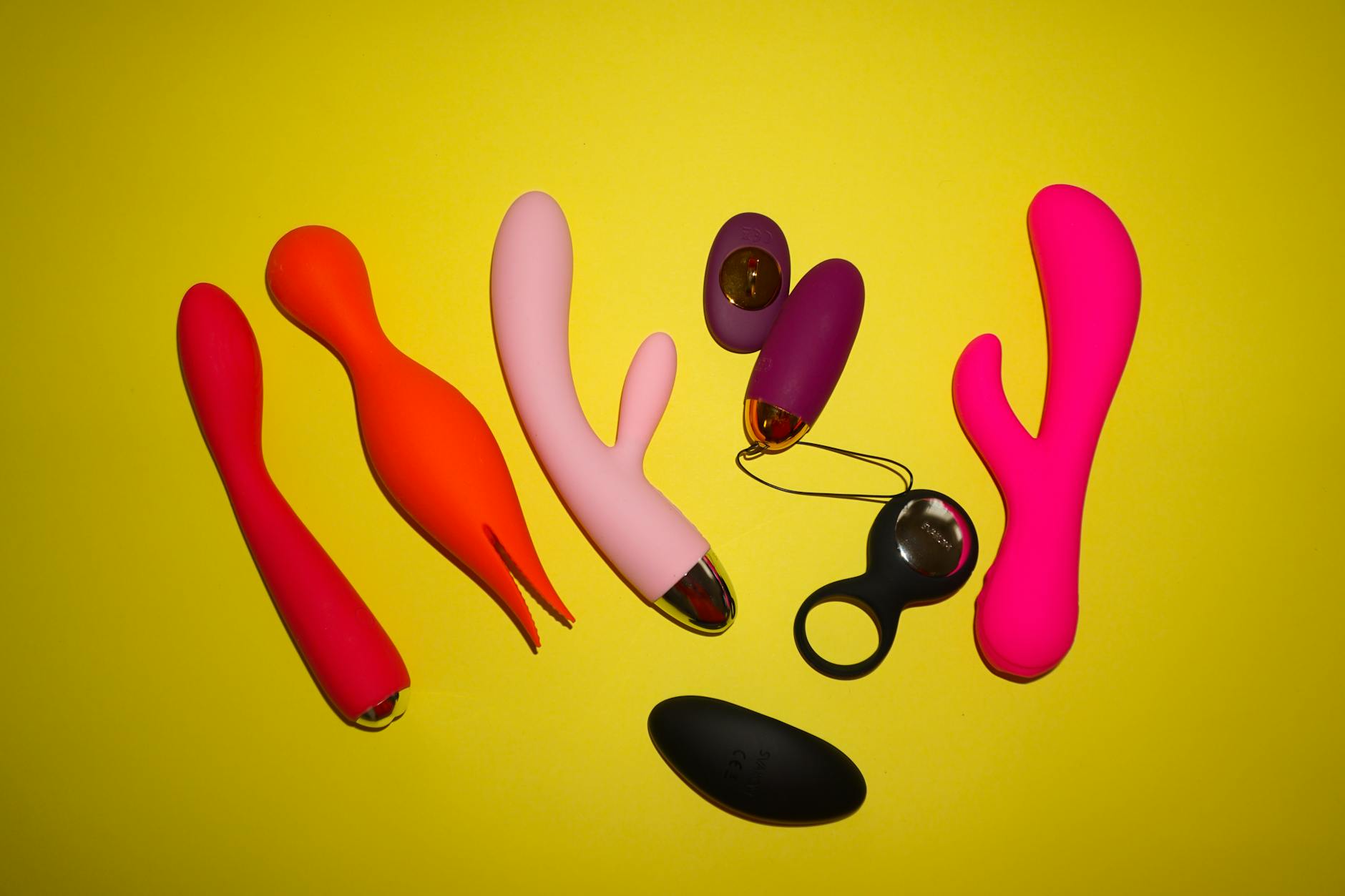
Let's be real about your cycle and arousal
Here's something no one tells you clearly: your arousal doesn't peak at ovulation. Your hormones peak. Those are completely different things, and the gap between them is exactly where confusion lives.
You're supposed to feel wildly turned on mid-cycle. That's the narrative. High estrogen, high testosterone, peak fertility, peak desire. Sounds logical. But for many people, ovulation is actually when arousal feels weirdly flat, touch-resistant, or just slower to build. Not lower, necessarily. Slower. Heavier. Requiring more intentional stimulation than usual.
This isn't broken. It's neurochemistry doing something counterintuitive.
Why ovulation slows arousal (even when hormones are high)
Three hormones matter: estrogen, testosterone, and progesterone. At ovulation, estrogen and testosterone both surge. Progesterone is still low. So far so good, right?
But here's the twist. High estrogen increases blood flow to the pelvic floor and increases genital sensitivity. Which should mean faster arousal. Except estrogen also increases vaginal lubrication by making the vaginal tissue swell and soften. That swelling changes the angle and pressure of touch on the clitoris. Direct friction that felt perfect during your follicular phase now feels different. Blunter. Less precise.
Your body isn't less aroused. It's differently aroused. The signal is getting lost in the noise of changing tissue architecture.
Add in ovulation's cortisol spike (yes, ovulating involves a tiny stress response in your brain) and the mild intestinal inflammation that comes with the surge in prostaglandins, and your nervous system is basically in a slightly elevated alert state. Not panicked, but not fully relaxed either.
And that matters because arousal requires parasympathetic nervous system dominance. It requires relaxation. When your body is subtly activated by hormonal changes, arousal takes longer to register.
The sensation gap: why direct touch feels less intense
Touching your clitoris directly during ovulation can feel almost numb compared to the day before. Not because sensation is gone, but because the clitoral tissues are temporarily engorged and less sensitive to localized pressure.
This is where lemon vibrators and suction devices solve a real problem. Suction stimulates the clitoral nerve endings without relying on direct friction. It distributes pressure across a larger surface area, working with the swollen tissue architecture instead of against it.
A lemon clitoral vibrator like the Lem uses gentle air-pulse technology to create wavelike stimulation that reaches deeper nerve pathways. Instead of friction that becomes dull on swollen tissue, you get sensation that bypasses the thickness and reaches the structures underneath.
This isn't metaphorical. The neural maps in your clitoris are still there, fully responsive. They're just temporarily resistant to the kind of touch you use the other three weeks of your month.
Pattern changes across your cycle with lemon vibrators
Most people discover that their favorite vibration pattern shifts with their cycle when they pay attention. During ovulation, you might find that the pulsing patterns on your lemon vibrator feel better than continuous vibration. Or you might need to start at a lower intensity and build up more gradually than usual.
This is completely normal. Your tissue sensitivity is changing. The penetration of sensation is changing. You're not becoming less responsive. You're becoming differently responsive.
Many of my clients notice they prefer patterns 2 and 3 on the Lem during ovulation, when they'd normally jump straight to pattern 5. Starting lower and building up actually increases the overall arousal experience because it matches your nervous system's current rhythm.
How to work with your cycle instead of against it
Three strategies change everything:
First, acknowledge the shift. Stop expecting your body to respond the same way it did five days ago. Expecting ovulation arousal to match your follicular phase arousal is like expecting a pasta sauce to taste the same before and after you've heated it. The ingredients are the same. The texture and the way flavors register are different.
Second, extend your warm-up time. During ovulation, give yourself an extra five to ten minutes before introducing any vibration. Breathing, gentle touch without vibration, mental focus on sensation. This pulls your nervous system out of that subtle activation state and into relaxation. Once you're actually parasympathetically engaged, then introduce your lemon vibrator.
Third, use suction strategically. The Lem's air-pulse technology works particularly well during ovulation precisely because it doesn't rely on friction. It's working with your swollen tissue, not against it. If you've been using a traditional vibrator and hitting that flat-spot during ovulation, switching to a lemon clitoral vibrator often resurrects sensation immediately.
The psychological layer (which is bigger than it sounds)
Here's the thing that makes this harder than pure physiology: you expect ovulation to feel amazing. Your brain knows your hormones are high. So when arousal feels slow, you interpret it as something being wrong. With you, with your partner, with your body.
It's not. It's biology being weird and perfectly normal at the same time.
But psychologically, that expectation gap creates resistance. Your nervous system feels your disappointment and tenses up. Tension kills arousal faster than anything else. You're now in a feedback loop where you're fighting your body's actual needs in order to match an imaginary template of what ovulation should feel like.
Once you know this is a thing, it changes everything. You stop fighting. You start adjusting. And usually within two cycles of paying attention, you'll find patterns that work with your specific ovulatory response, not against it.
When to expect the shift to happen
The flattening typically starts around 24 hours before ovulation and lasts until about 12 hours after. Some people experience it more dramatically than others. Some barely notice. Irregular cycles make this harder to predict, but if you're tracking, you'll start recognizing your own pattern.
The few days immediately after ovulation are often the sweet spot. Progesterone is starting to rise, which actually increases GABA and helps your nervous system relax. You get the lingering benefits of the testosterone surge without the tissue swelling. If you're going to experiment with sensations and techniques, the luteal phase early on is often where you'll discover your best insights.
Making ovulation work for you instead of against you
Your body isn't broken during ovulation. Your arousal architecture is just temporarily reorganized. Working with that reality, using tools like lemon vibrators that are specifically designed to work with swollen tissue and distributed sensation, makes the difference between fighting your cycle and flowing with it.
Start paying attention. Note what works when. Switch your approach mid-cycle without judgment. Give your nervous system the time and calm it actually needs, not the time you think it should need. Your pleasure isn't seasonal. It's monthly. And once you decode the rhythm, you get to work with it instead of against it.