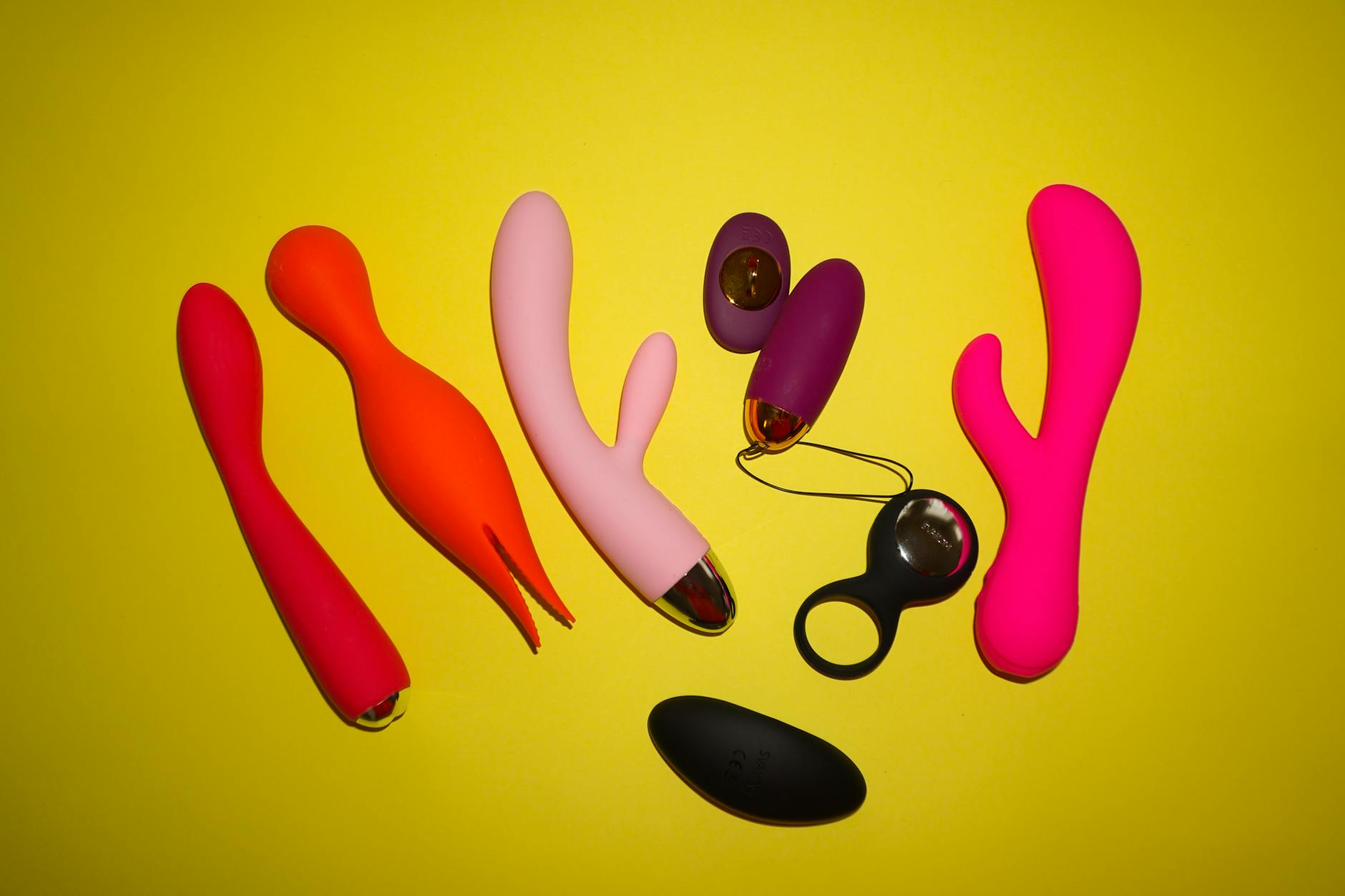
How Lemon Vibrators Build Confidence After Sexual Shame
Let's be real: shame doesn't just live in your head. It lives in your pelvis, your breath, your flinch reflex when someone touches you. It's somatic. It's neurological. And it's not something willpower or positive affirmations alone can undo.
But here's what's also true. Your nervous system can learn something new. Slowly, with permission, with tools that don't demand anything from you, you can rewire how your body responds to sensation. A lemon vibrator isn't therapy, but it can become part of your own healing practice.
What shame actually does to your body
When you've been told your sexuality is wrong, dirty, or dangerous—whether by religion, family, trauma, or culture—your body learns to contract. Your pelvic floor tightens. Your breath shallows. Blood flow redirects away from your genitals and toward your limbs (the freeze response).
Then something wild happens: your brain decides that this contraction is normal. Safe, even. When you try to relax into pleasure, your nervous system sounds an alarm. That's not prudishness or being "broken." That's a fear response with a very logical origin story.
Many of my clients report that they spent decades unable to orgasm, or orgasming only in specific contexts where they felt invisible or numb enough to bypass the shame entirely. That's not a sexuality issue. It's a safety issue.
Why solo exploration matters
Here's the thing about rebuilding trust in your own pleasure: it can't happen in the presence of someone else's needs, eyes, or agenda. Not at first.
When you're alone with a lemon clitoral vibrator, no one is waiting. No one is judging. No one will be disappointed if you stop mid-touch to cry, laugh, or just sit in confusion. There's no performance. There's no rush. There's just your nervous system and an invitation to feel something without the weight of shame.
That invitation matters. It's the opposite of how you learned to relate to your body in the first place.
How lemon vibrators specifically help
Three reasons a lemon vibrator is particularly useful in shame recovery:
1. The suction mechanism removes directness. For shame survivors, direct clitoral stimulation can feel too vulnerable, too exposing, too much like "I'm asking for this." Air-suction technology (like the lem vibrator) creates sensation without that feeling of nakedness. You're being held, not invaded.
2. The pattern options give you control. Low patterns mean you can start at 20% intensity. You're not choosing between "off" and "a lot." That granularity is healing. Each time you turn up the intensity, you're making a choice that affirms your own desires matter.
3. The shape is actually inviting. A lemon vibrator looks like exactly what its name says. It's not medical-looking. It's not intimidating. Many of my clients say the playfulness of the design alone makes shame feel a little less heavy.
The nervous system retraining protocol
If you're starting from a place of real shame or touch aversion, here's the actual framework I use with clients.
Phase 1: No expectation of pleasure (weeks 1-2). Your only job is to hold the lemon vibrator in your hand. Don't use it yet. Look at it. Feel its weight. Notice your body's response without judging it. You might feel resistance, curiosity, fear, or nothing. All of those are information, not problems.
Phase 2: External touch only (weeks 2-4). Turn on the lowest pattern. Use it on your inner thighs, your lower belly, your chest. Nowhere near your genitals. The point is to prove to your nervous system that pleasure can be safe, can be slow, can exist without high stakes. Orgasm is not the goal. Breathing and relaxation are.
Phase 3: Approach your genitals (weeks 4-6). Keep the lemon vibrator on a low pattern. Use it on the outer labia, the mons pubis, the area around your clitoris. Not on the clitoris itself. Stay in this zone until it feels boring. That boredom is a sign your nervous system is downgrading the threat level.
Phase 4: Slow introduction (weeks 6+). Now you can use the lemon vibrator directly on the clitoris, still on low. No goal. No timer. If you feel shame spike, you stop and go back to phase 2. This isn't linear. It's not a race.
What happens when you hit resistance
At some point in this process, you'll likely feel a wave of discomfort, guilt, or dread when you touch yourself. That's not a sign you're doing something wrong. That's your nervous system testing whether pleasure is actually safe or if it's a trick.
The move here is to pause, not to push through. Feel the sensation. Name what comes up. "I'm feeling afraid right now." Then make a small choice: touch somewhere safer, lower the intensity, or stop altogether and try again tomorrow. Each time you respect what your nervous system is telling you, trust rebuilds.
This is the opposite of what shame taught you, which was to override your own signals and soldier on. Rebuilding means listening.
The partner conversation (if there is one)
Honestly, this work is solo work. But if you have a partner, they need to know what you're doing and why. Not in detail. Just: "I'm working on reconnecting with my own body after some shame patterns. I need space for that right now."
A partner who loves you will understand that your pleasure is not their job to generate. Your healing is your own. And the kicker? Once you rebuild confidence in your own body, partnered sex often becomes far more reciprocal and real.
If a partner responds with pressure, jealousy, or confusion, that's data about the relationship. Not a reason to abandon your own healing.
How long does this take
Anywhere from a few months to a few years, depending on the depth of the shame and the presence of trauma. I wish that weren't true. But rushing this work teaches your nervous system that your pace doesn't matter. And that's just another version of the shame you're trying to undo.
The win isn't reaching some endpoint where shame is "gone." It's developing the capacity to feel shame when it shows up, acknowledge it, and choose pleasure anyway. That's the skill.
The role of the lemon vibrator in your larger healing
A lemon vibrator isn't a cure for sexual shame. Therapy is important if the shame is tied to trauma. So is education. So is time. But the vibrator is a tool that says: "Your body deserves to feel good, and you get to decide how."
That's actually revolutionary if no one has ever told you that before.
If you're ready to start, keep the expectations low. Curiosity over ambition. Permission over performance. And remember that every time you choose to touch yourself without shame, you're literally rewiring your nervous system's sense of what's safe.
That's the work. And it's worth it.
People also ask
How long does it take to feel comfortable using a lemon vibrator after sexual shame?
There's no universal timeline, but I usually see shift in the first 2-4 weeks of consistent, low-pressure solo exploration. That doesn't mean shame is gone. It means your nervous system is beginning to separate touch from threat. The deeper work of untangling shame from identity typically takes months. Be patient with yourself. The fact that you're trying at all is already a breakthrough.
Can a lemon vibrator trigger shame responses, or can it help move past them?
Both are possible. If using a lemon vibrator brings up intense shame, guilt, or panic, that's important information. It means your nervous system still perceives it as unsafe. That's when you pause, maybe work with a therapist, and revisit when you have more support. A vibrator should feel inviting, not like an endurance test. If it feels like the latter, you're pushing too fast.
Is it better to start with a lemon vibrator or a different type of toy?
For shame recovery specifically, I lean toward lemon clitoral vibrators because of the suction mechanism and the aesthetic. Suction feels less aggressive than direct vibration, and the playful design removes some of the clinical heaviness. That said, your intuition matters most. If a different toy feels less triggering, start there. The point is the practice, not the specific tool.
Should I tell my partner I'm using a lemon vibrator for shame recovery?
That depends on your relationship's baseline of honesty and your own comfort level. You don't owe anyone access to your healing process. But if your partner is curious or if the vibrator becomes part of partnered sex later, honesty usually feels better than secrecy. Something like "I'm working on reconnecting with my body" is enough. You don't need to over-explain.
What if using a lemon vibrator brings up memories or trauma?
Stop immediately and seek support from a trauma-informed therapist. Sexual shame that's rooted in actual trauma needs clinical care, not just a vibrator. That said, many therapists actually recommend self-pleasure as part of trauma recovery, so the two can work together. The key is doing it with proper support, not in isolation.
Can shame come back after I've rebuilt confidence with a lemon vibrator?
Yes. Shame can resurface in new contexts (new relationships, life transitions, cultural events). The difference is that once you've felt your body's capacity for safe pleasure, you know it's possible. You're not starting from zero again. You're remembering. That makes the rebound much faster.
If you're navigating complex feelings about pleasure and want to explore deeper, I'm here to help. Reach out through our contact page to discuss what your healing might look like.