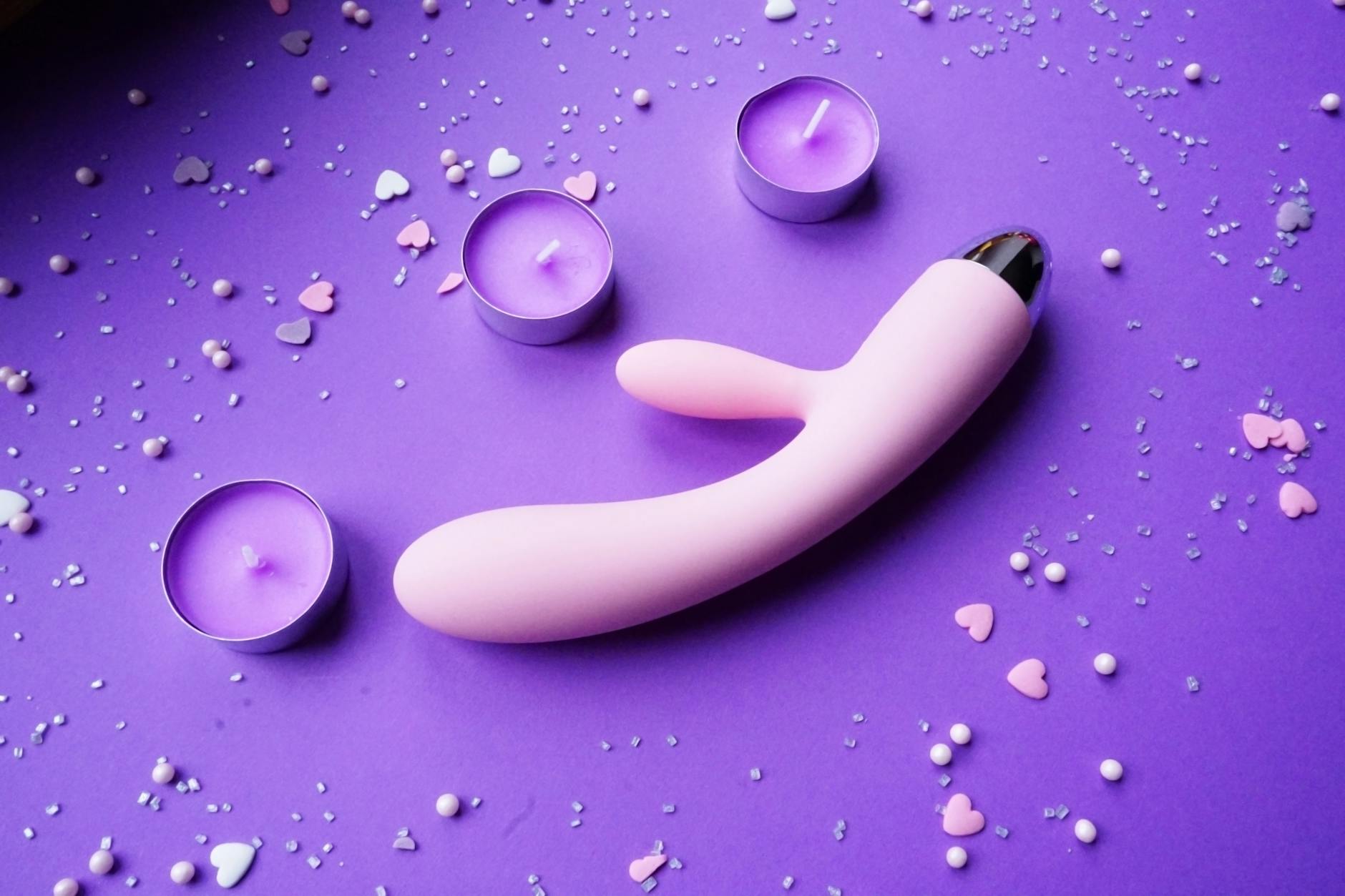
Can Lemon Vibrators Help With Low Arousal After Menopause
Let's be real: menopause can tank your libido. For some people, it's temporary. For others, it sticks around like an unwelcome houseguest. And if you're in a relationship, that shift doesn't just affect you. It affects the intimacy you've built over years, sometimes decades.
But here's what I've learned from working with couples through this transition. Low arousal after menopause isn't a life sentence. It's a redirect. And the right tools, including clitoral vibrators like the lemon vibrators from Hello Nancy, can help you reconnect to pleasure in ways that feel fresh and actually aligned with how your body works now.
Let me walk you through what's actually happening physiologically, why the usual advice fails, and what really works.
The Arousal Gap That Nobody Talks About
Menopause doesn't just lower estrogen. It flattens arousal itself. Your partner might still want you. You might still want to want them. But the physical spark that used to ignite automatically now takes time, intention, and sometimes external help to kindle.
This is where couples run into trouble. Partners misinterpret the slowdown as rejection. The person experiencing it feels guilt, pressure, and often shame. The gap widens. And suddenly you're in a loop where avoidance breeds resentment, which breeds more avoidance.
I see this pattern constantly in my therapy practice. And almost every time, the answer isn't more communication about the problem. It's permission to change the solution.
Why Your Brain Chemistry Shifts (And It's Not All Bad)
Estrogen and testosterone both fuel spontaneous desire. Post-menopause, both drop. That's fact. But the absence of those hormones creates space for something else. Responsive desire.
Responsive desire means your arousal doesn't arrive on its own. It arrives in response to physical touch, mental focus, or novelty. That's not broken. It's just different. And honestly, it's often more reliable once you understand it.
The problem is that most sexual advice assumes spontaneous desire. "Just let it happen." "Don't think about it." "Try lighting candles." Those instructions don't work for responsive desire because responsive desire requires you to actually show up and engage with sensation.
This is where a clitoral vibrator enters the picture. Not as a Band-Aid. As a direct interface with your nervous system that bypasses the hormonal gap.
How Clitoral Vibrators Actually Rewire Arousal After Menopause
A lemon vibrator from Hello Nancy works differently than penetrative sex, fingers, or most other stimulation. The suction-based design creates gentle, consistent pressure that engages clitoral nerve clusters without the friction that can feel uncomfortable on thinner, post-menopausal tissue.
When you use a clitoral vibrator consistently, something shifts. Your body starts to remember arousal. Nerve pathways that quieted down activate again. Blood flow increases. And crucially, your brain reconnects the sensation with pleasure rather than with effort.
Many of my clients report that after a few weeks of intentional, solo play with a quality clitoral vibrator, their responsive desire becomes easier to access. They need less warm-up time. They remember what pleasure feels like. And they show up to partnered sex from a place of "I want to" rather than "I should."
The Role of Novelty (And Why You Might Resist It)
There's often shame around introducing toys into a long-term relationship. The feeling that needing one means something is wrong. That your partner should be enough.
Let me reframe that. Your partner is enough. Your relationship is enough. But your body has changed. A quality lemon clitoral vibrator isn't about your partner being insufficient. It's about your body having new needs. You wouldn't shame yourself for needing reading glasses after 50. Don't shame yourself for needing different stimulation after menopause.
Novelty actually matters here. Responsive desire thrives on newness. If penetrative sex has been your primary focus for 20 years, adding focused clitoral stimulation with a purpose-built tool introduces novelty that can reignite interest for both of you.
Building a Conversation With Your Partner
If you're in a relationship, the next step matters. But it's not what you might think.
Don't start with "I want to try a toy." That lands as criticism. Start with curiosity. "I've noticed arousal feels different now. I want to explore what actually works for my body. Would you be open to that?" That's vulnerable. It's also invitational.
You might explore solo first. Some people find that rediscovering their own arousal alone, with a clitoral vibrator, gives them confidence and clarity before bringing a partner back in. Others want to explore together. Both are valid.
What matters is that you're reframing the problem as "How do we adapt to my body's new reality?" instead of "What's wrong with my desire?" Those are fundamentally different conversations.
The Long-Term Play: From Tools to Rituals
If you start with a lemon vibrator, don't stop at the mechanical alone. The ritual matters.
Set time aside. Not spontaneously. Block it. Turn off phones. Light a candle if that helps you transition into a pleasure mindset. Some of my clients create playlists. Others read erotic fiction for 10 minutes first. All of these are scaffolding for responsive desire. They tell your nervous system that pleasure is the plan.
Use quality lubricant. Post-menopausal tissue is drier, and water-based lube makes clitoral vibrators more comfortable and more effective. This isn't a hack. It's respecting your body's current reality.
Give yourself time. Responsive desire doesn't show up on a schedule. Some sessions are more responsive than others. That's not failure. That's normal.
When Low Arousal Signals Something Deeper
That said, sometimes low arousal after menopause isn't just hormones. It's relationship depletion. It's grief about aging. It's burnout from caregiving, work, or mental load. It's a partner who isn't making you feel safe or seen.
If you've been using a clitoral vibrator consistently and arousal still doesn't budge, that's information. It might mean you need to talk to a relationship therapist. Or a medical provider. Or both. Sometimes pleasure is blocked by something that a toy can't fix. That's not weakness. It's clarity.
The Conversation About Expectations (Yours and Theirs)
One more thing. If you're introducing a lemon clitoral vibrator to a partnered sexual experience, be clear about what you're aiming for. Are you using it for solo pleasure? For partnered play? As foreplay? As your primary source of orgasm? All of these are valid. But they require different conversations.
I've seen couples thrive after menopause because they reset expectations. Instead of "sex should look like it did at 30," they ask "What does pleasure look like for us now?" Sometimes that includes partnered penetration. Sometimes it's focused clitoral play with a vibrator. Sometimes it's hands, or toys, or a rotation. The shape matters less than the honesty.
FAQ: Your Questions About Lemon Vibrators and Low Arousal After Menopause
Will a lemon vibrator fix low arousal if I don't want sex in the first place?
No. A clitoral vibrator is a tool for responsive desire. It works when your body can access arousal but needs help getting there. If you don't want sex at all, that's a different question. It might be hormonal (talk to your doctor about testosterone therapy). It might be relational. It might be that you genuinely don't want sex anymore, and that's a valid choice too. A vibrator can't create desire that isn't there somewhere. It can only amplify what's possible.
Is using a vibrator after menopause weird or a sign something's wrong?
No. Clitoral vibrators are designed for ease of use and consistency. After menopause, your body benefits from that consistency. Using a lemon clitoral vibrator isn't admitting defeat. It's adapting. Millions of people do this. You're in good company.
Can my partner feel threatened if I use a clitoral vibrator?
Some partners do. That's about their insecurity, not your need. A quality conversation helps. "This helps me access arousal, which means better sex for both of us" is different from "I need this because you're not enough." Frame it that way. If a partner remains threatened after an honest conversation, that's relational material worth exploring with a therapist.
How often should I use a lemon vibrator to rebuild arousal?
Start with once a week for solo exploration. Some people find that twice weekly works best. There's no magic number. But consistency matters more than frequency. Your nervous system responds to reliability. Show up regularly, and your body starts to remember arousal more quickly.
Will a vibrator give me numbness or desensitize me to other touch?
Not if you use it intentionally. Most desensitization comes from overuse at high intensity. Start with lower settings. Take breaks between sessions. And vary your stimulation. Use your hands. Use a partner's hands. The vibrator is one tool, not the only tool.
What if lemon vibrators don't work for me?
That's information too. Some people respond better to wand vibrators, or clitoral stimulators with different patterns. Some respond better to psychological approaches, or partner dynamics shifts. Clitoral vibrators work for many people post-menopause, but not everyone. If they don't, talk to a sex therapist or a menopause-trained healthcare provider. There are other paths.
The Real Work Starts With Permission
Menopause changes arousal. But it doesn't end it. And tools like a well-designed clitoral vibrator can help you access pleasure that feels aligned with how your body works now.
The real work, though, is internal. It's giving yourself permission to adapt. Permission to want differently. Permission to use tools that help. Permission to ask your partner for different things. Permission to prioritize your own pleasure even if it looks different than it did at 35.
Your arousal matters. Your pleasure matters. Your desire deserves attention, intention, and the tools that actually work for your body now. That might include a lemon vibrator from Hello Nancy. Or it might be something else entirely. The point is to get curious, not to give up.
Ready to explore what works for your body? Get in touch with our team. Or start with our guide on how lemon vibrators work differently on sensitive post-menopausal skin, or learn strategies for using clitoral vibrators long-term without any numbness.